
Reimagining Langston Hughes’ ‘The Weary Blues’ for young readers

Shamar Knight-Justice remembers the first time he read poetry by Langston Hughes.
It was 2002 in Ashburn, Virginia. He and his younger brother moved with their mother after their parents divorced. Knight-Justice became estranged from his mother but searched for an outlet to help him confront his feelings.
He started reading “Mother to Son,” Hughes’ poem about a parent sharing her feelings with her child, in a poetry book his mother gifted him. It made him empathetic and compassionate toward her.
“Well, son, I’ll tell you:
Life for me ain’t been no crystal stair,” the book reads.
“It helped me navigate that situation, because it felt like what she was trying to say when lecturing me about my decisions, why she didn’t do certain things, and how she experienced life in her own way while we were redefining what our relationship was,” Knight-Justice, 38, told UATL.
He said he felt Hughes’ writing could help youth like him overcome personal challenges and value their cultural identities.
He’s the editor and an illustrator of “Melodies of the Weary Blues: Classic Poems Illustrated for Young People,” a children’s storybook that updates “The Weary Blues,” Hughes’ debut poetry anthology from 1926. The picture book, published Jan. 20, targets ages 6 to 10 and includes select poems from the original collection.
The artwork is created by 23 Black and brown visual artists. They interpret Hughes’ poetry using vibrant colors, shapes and melanated characters.

Hughes was a prolific writer of essays, plays and books that incorporated jazz and blues, addressed racism, and celebrated the Black experience in America. He was a leader of the Harlem Renaissance, a Black literary, artistic and cultural movement in New York in the 1920s.
Hughes died in 1967 at age 66.

The book comes with short biographies of Hughes, a timeline of his accomplishments, and the picture book’s contributors. It includes illustrations by Atlanta-based fine artists Charly Palmer and Frank Morrison.
Knight-Justice, chief academic officer of Ethos Classical Charter School, an elementary school with arts curriculum in Southwest Atlanta, wanted to introduce families to other Black visual artists and career possibilities in literature.
“It’s an opportunity to spotlight different artists we want everybody to see no matter what journey they’re on,” he said.
“I want to be able to create books where kids can see themselves reflected in the images, be in proximity with someone who is into book making, realize the artist and author are real people with professions they can aspire to be.”
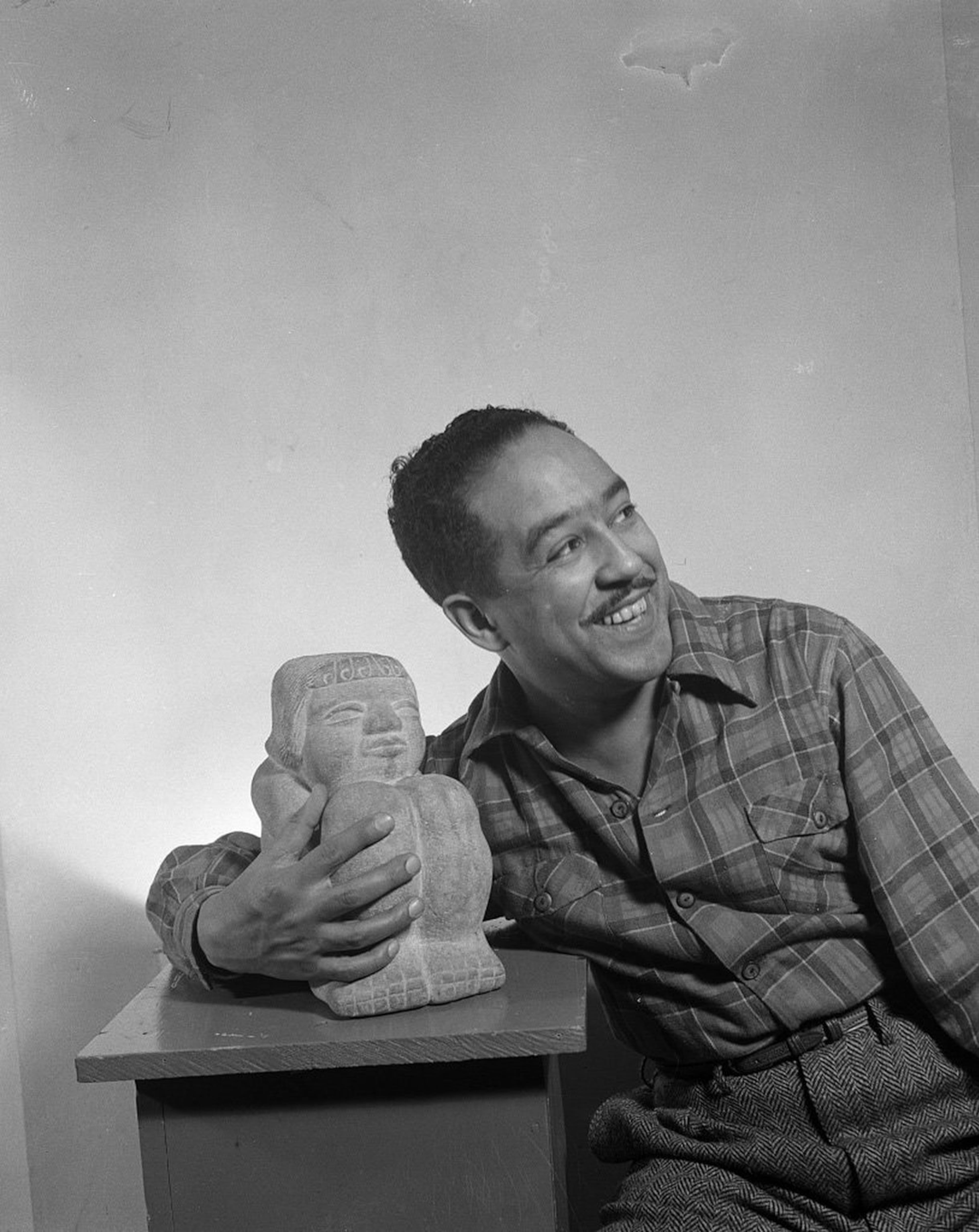
The storybook arrives in time for the 100th anniversary of “The Weary Blues” and Black History Month. Knight-Justice wrote a letter to Hughes’ estate to get their approval.
“We’re honoring a pillar in this literary community, so I wanted to make sure everyone aligned with the project, and they were really excited about it being done in a different way with so many different artists,” he said.
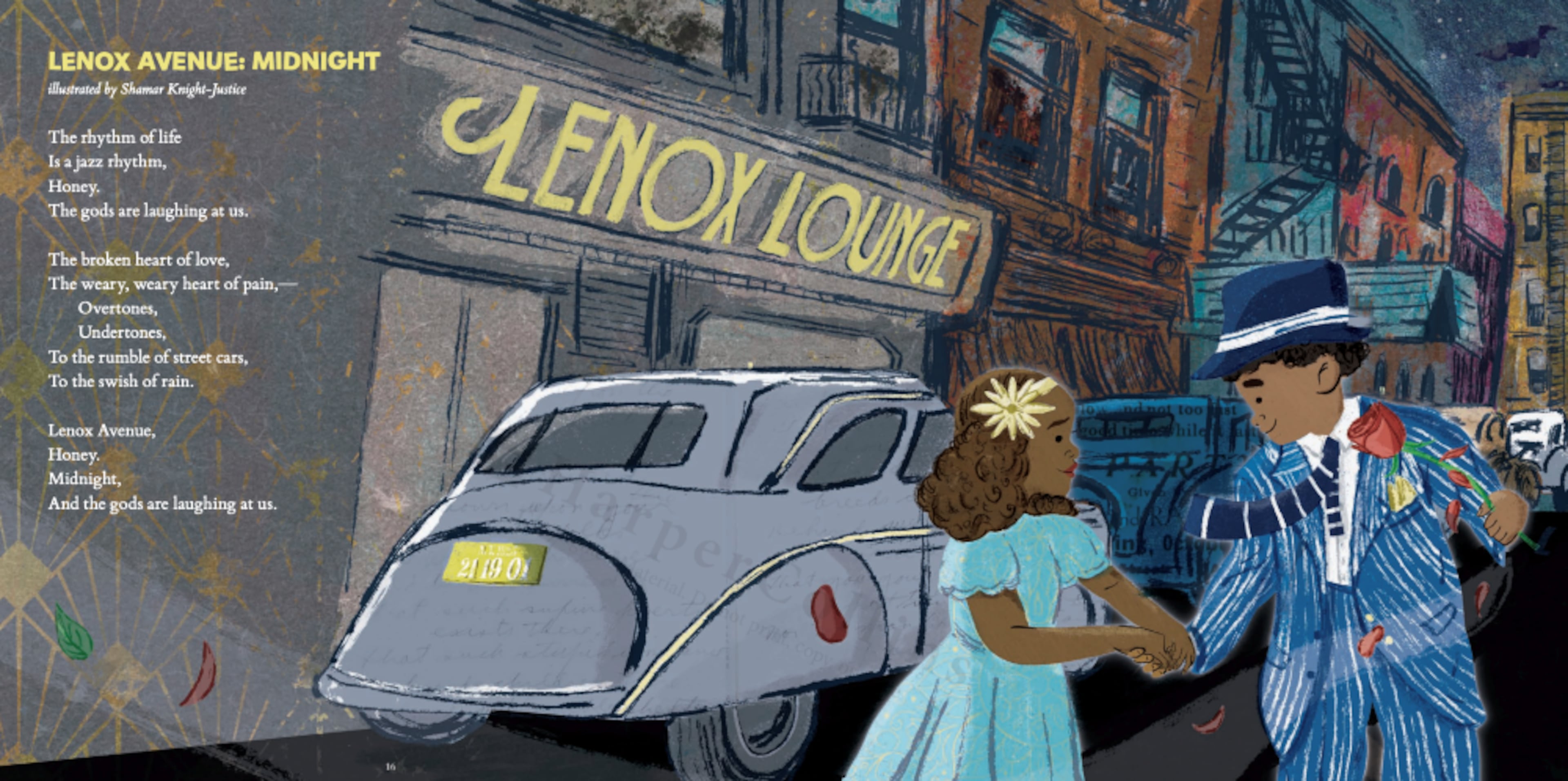
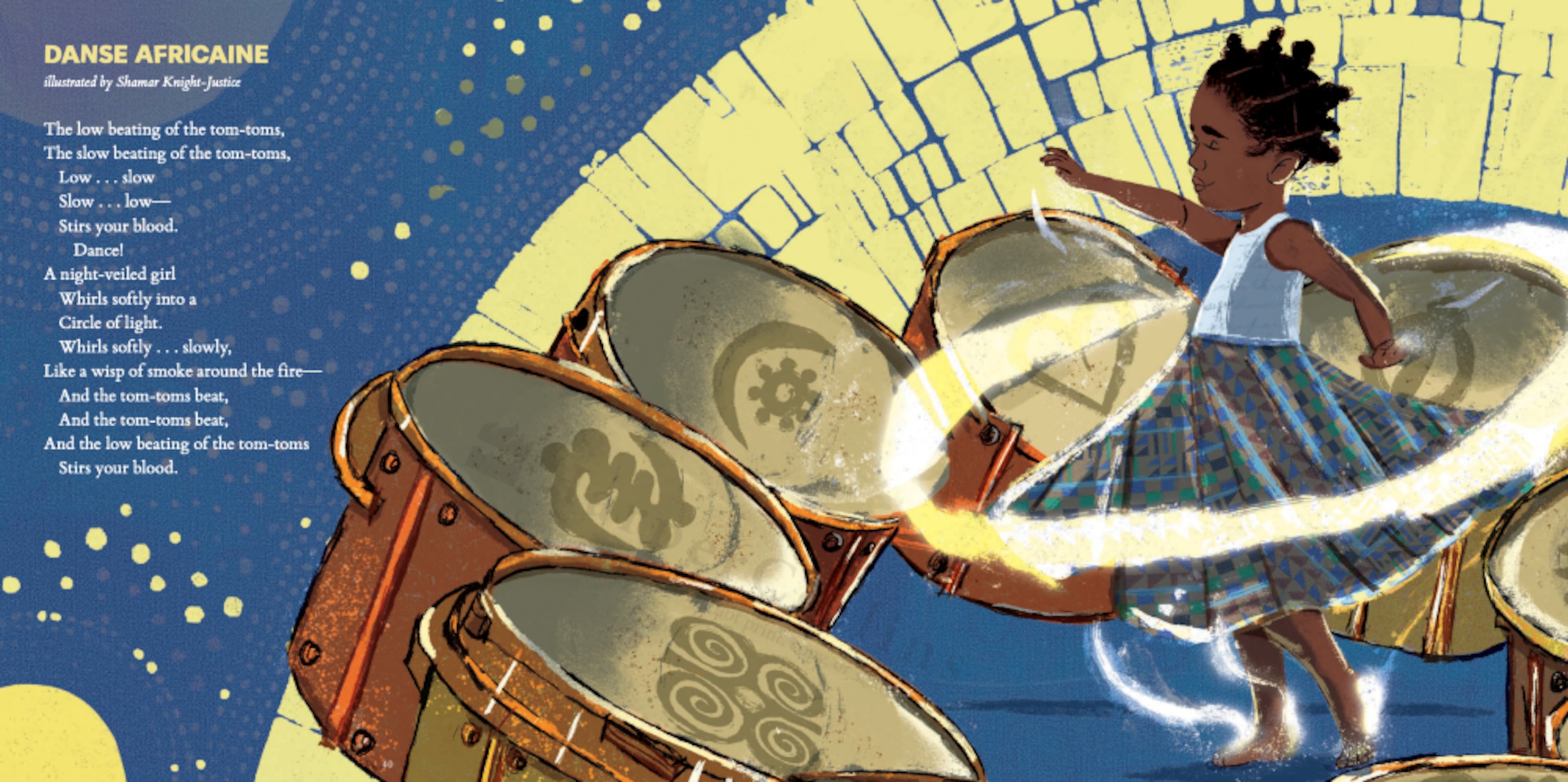
In the book, Knight-Justice created youthful Black characters with mixed media materials for “Lenox Avenue: Midnight” and “Danse Africaine.”
Palmer used acrylic paint on an illustration board to create jazz musicians for “Poem.” His 2023 coffee table book, “The New Brownies Book: A Love Letter to Black Families,” co-authored with his wife, Karida Brown, included an entry on Hughes as an aspiring writer.
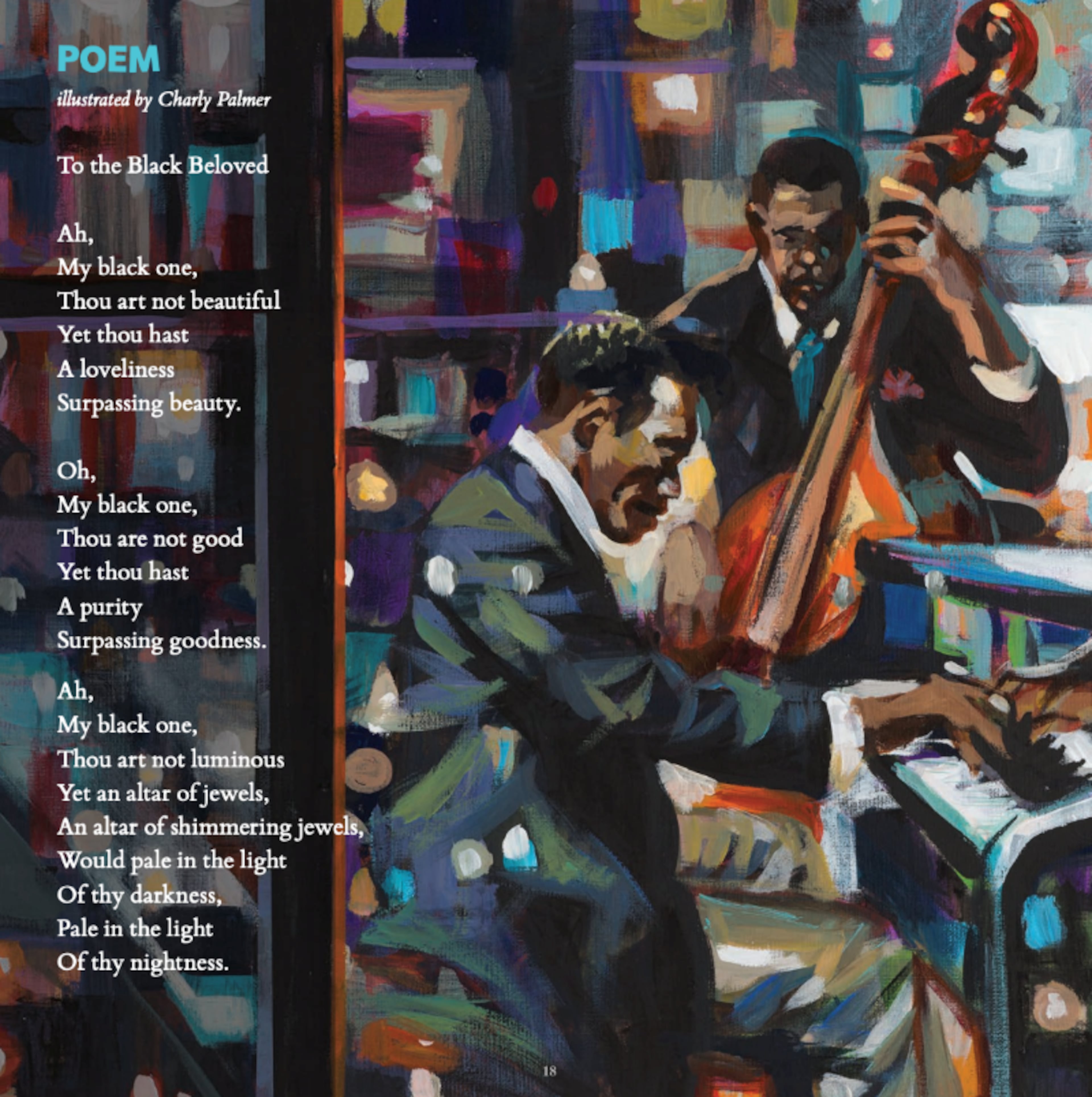

Palmer said he appreciates Hughes’ minimalist writing style. “He’s a master of words who found his voice by giving you so many different perspectives. He’s not using expansive vocabulary, but it seems real, authentic and made him stand out,” Palmer said.
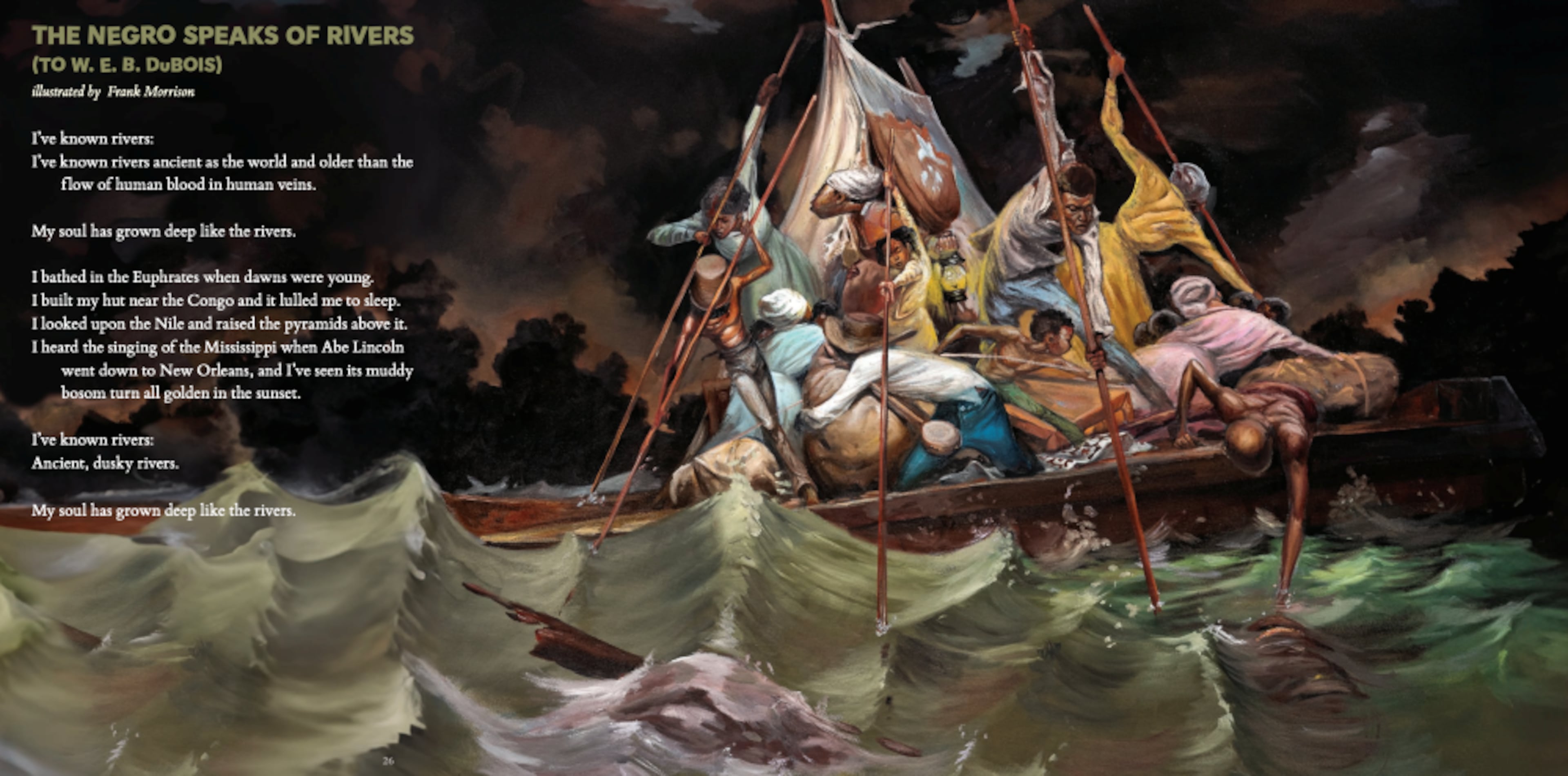
“Black Moon Rises,” Morrison’s oil on canvas painting, is paired with “The Negro Speaks of Rivers.” The piece depicts a Black family on a ship helping one another survive a storm and tidal wave.
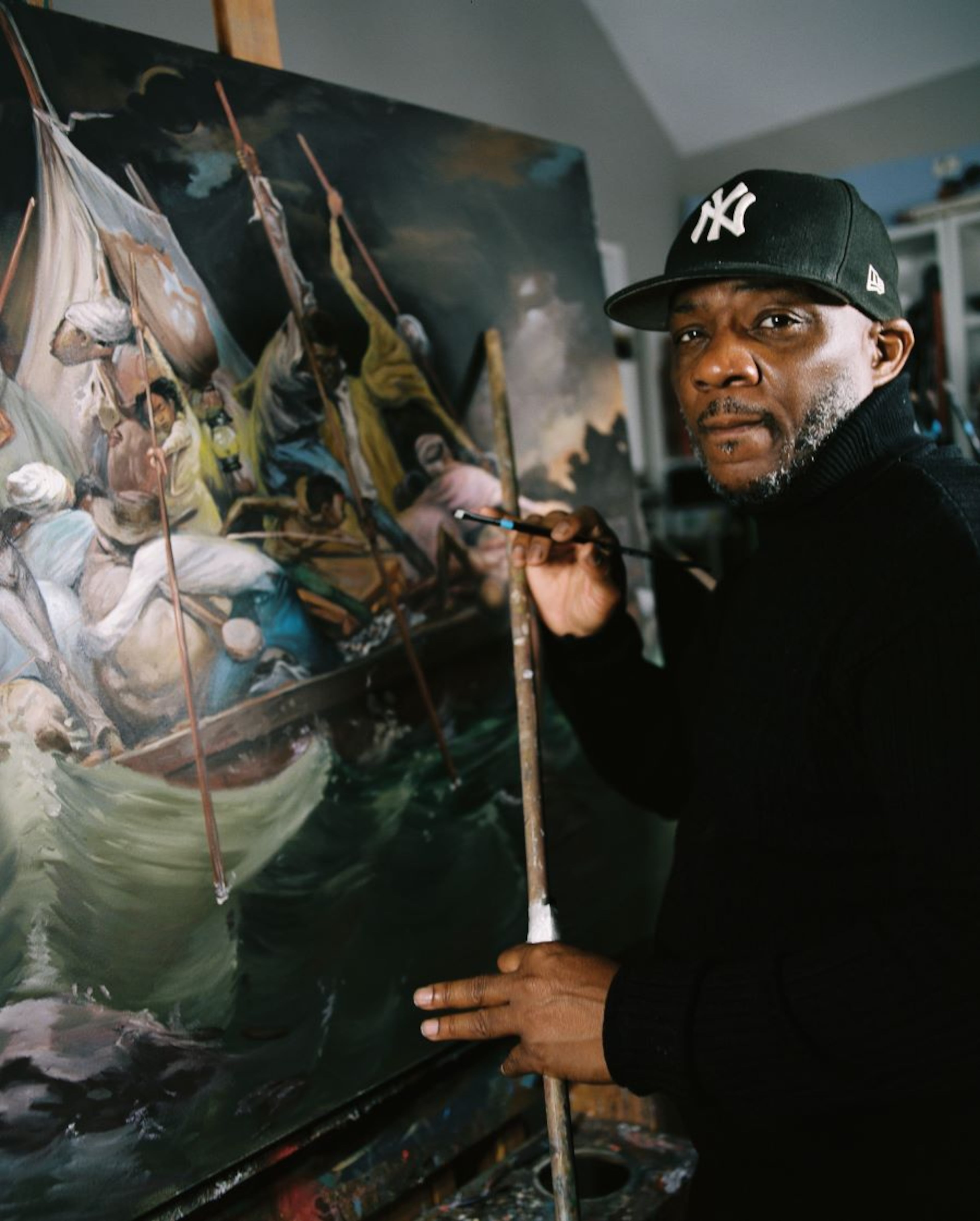
The latter poem reads:
“I’ve known rivers;
“I’ve known rivers ancient as the world and older than the flow of human blood in human veins.
“My soul has grown deep like the rivers.”
In 2021, Morrison was commissioned to design an art project in Hughes’ brownstone in Harlem, New York.
Morrison, who was raised by military parents, wanted to reimagine his relatives as superheroes in the picture book.
“I try to deal with subject matter I think will make a difference in these children. We are used in war books as footstools, jokes, gestures entertaining the troops and not heroic,” he said.
“It was an embarrassment to my family that fought, so I wanted a story we could believe in about being brave, heroic, confident, tenacious and overcoming obstacles to be a part of the American Dream.”
“Melodies of the Weary Blues” was conceptualized in 2022 after Knight-Justice had a conversation with his agent, Christy Ewers, about the impact Hughes had on his life. She suggested he create a modern version of “The Weary Blues” with an All-Star cast of Black and brown artists.
The roster combines Ewers’ clients with names Knight-Justice handpicked.
“We went through a wish list of artists we could see on these different poems. I did a preselection to identify who would do what poem, retyped every poem we picked and tried to create cohesion with the poems that would make sense in a picture book format,” Knight-Justice said.
“Melodies of the Weary Blues” was released at a time with school districts continuing to ban books, the current administration forcing museums to eliminate exhibits recognizing cultural diversity and a growing literacy crisis in public education.
Knight-Justice wants the book to inspire young people to appreciate Black literature, have pride in themselves, and continue to address issues affecting them.
“I want them to be and feel bold. Hughes was all about expression, joy and the Black experience. He amplified our voices and moments in a time there wasn’t cameras every single place, and he figured out a way to document what was happening in the world,” he said.
“Sometimes we introduce poetry to kids too late, so they don’t really understand how to use it. This gives them earlier access to a legendary poet they should be exposed to.”
Morrison said he hopes the book will excite kids about Hughes. “Go research, and let this be your rabbit hole,” he said.
Five essential Langston Hughes books and collections
- “The Weary Blues” (1926)
- “Not Without Laughter” (1930)
- “The Big Sea” (1940)
- “Fields of Wonder” (1947)
- “I Wonder As I Wander” (1956)
This year’s AJC Black History Month series marks the 100th anniversary of the national observance of Black history and the 11th year the AJC has examined the role African Americans played in building Atlanta and shaping American culture. New installments will appear daily throughout February on ajc.com and uatl.com, as well as at ajc.com/news/atlanta-black-history.
About the Author

Christopher A. Daniel is a Black Culture reporter for The Atlanta Journal-Constitution. He is an Atlanta-based, award-winning journalist, cultural critic and ethnomusicologist. He previously taught courses at Morehouse College, Clark Atlanta University and Georgia State University.