
Tiffany Cross writes a love letter to Black women in a weary America
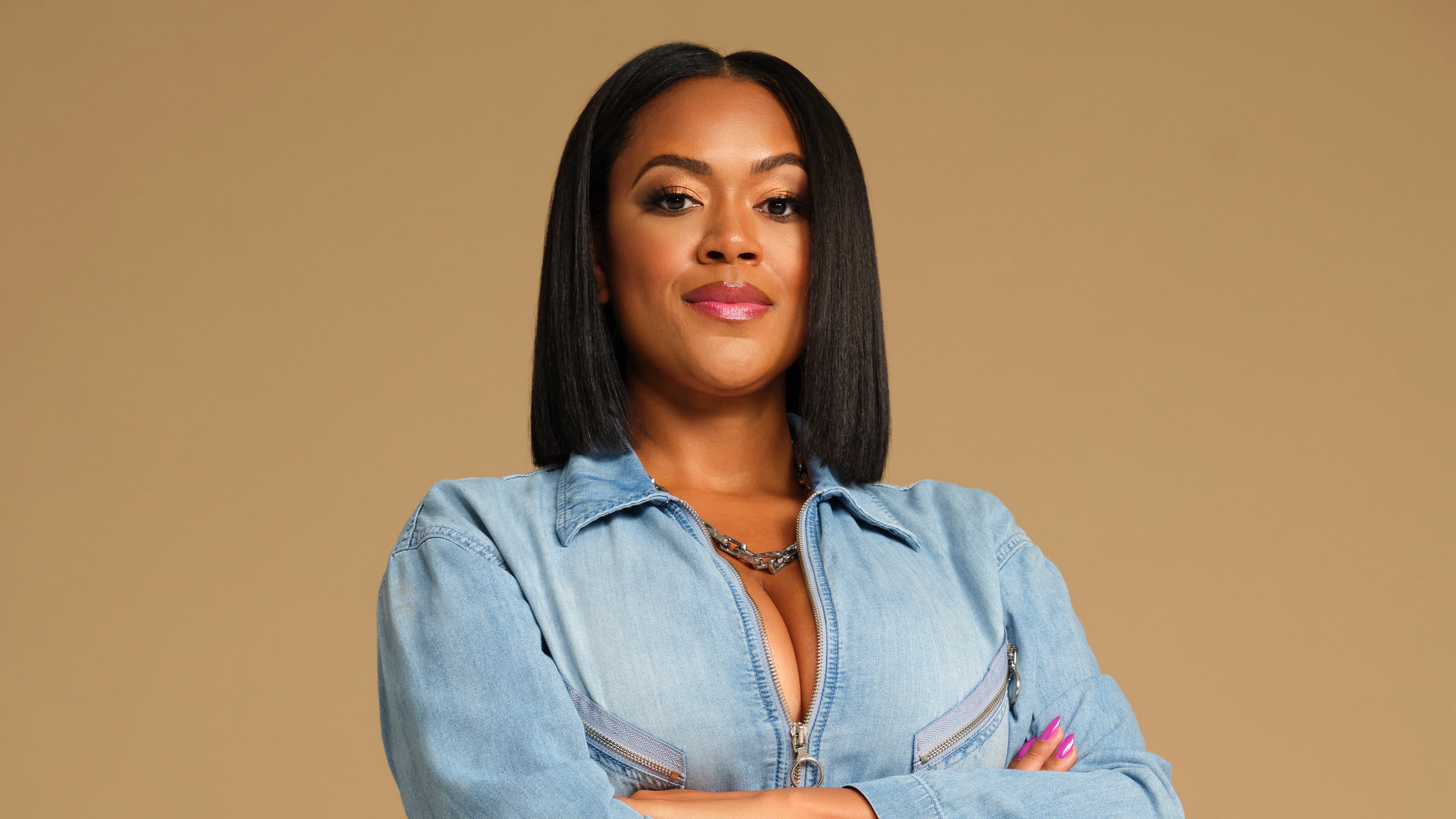
Tiffany Cross’ new book was not born in a television studio or during a political debate — spaces she knew well and once commanded.
After losing her MSNBC show, ending a relationship and watching the country shift politically after the 2024 election, Cross found herself emotionally depleted alongside many Black women experiencing similar grief, fatigue and disillusionment.
“We didn’t need to have some big meeting,” Cross said. “But the day after the election, Black women passed each other with knowing looks and knowing expressions. We had full conversations without saying a word to each other, with this collective heartbreak.”
Out of that heartbreak emerged “Love, Me: A Letter to Black Women in a Toxic Country, Career, & Relationship,” Cross’ examination of the pressures facing Black women in modern America.
Part memoir and part cultural critique, the book traces Cross’ experiences in cable news, dating and public life while exploring labor, loneliness, love and the economic instability many Black women face. It also incorporates research examining disparities across employment, health and economic systems.
Cross launched the book tour in Atlanta on Thursday, with a conversation with former Atlanta mayor and gubernatorial candidate Keisha Lance Bottoms at The Gathering Spot. On Saturday, she is scheduled to appear with author Michael Harriot for a 4 p.m. conversation at the Auburn Avenue Research Library.
“It’s not just a book about Tiffany Cross,” Harriot said. “It’s an examination of the lives and experiences of many Black women all throughout the country.”

For Cross, Atlanta is more than just another stop on the tour. It is where she began building both her journalism career and much of the worldview that now shapes the book.
Cross attended Clark Atlanta University in the late 1990s before financial hardship forced her to leave school. In the book, she writes candidly about struggling to afford tuition after leaving home as a teenager and navigating college largely on her own.
“I was the student that you didn’t want to lose,” she said. “I had dinner with professors. I went to lectures. I spent all my time immersed in learning.”
Though she did not graduate, Atlanta became the launching point for her journalism career. She got her start doing news cut-ins for the Frank Ski Morning Show on V-103 and WAOK before eventually landing at CNN in 2000.
“You could not tell me I was not Barbara Walters,” Cross said.
Moments before going on stage with Bottoms, Cross noted that Atlanta still occupies a special place in her imagination because of what the city represented for Black ambition, culture and political power during the 1990s.
“I was so proud to get my start here.” she said. “There’s something unique about Atlanta. There’s magic to a Black city.”
Cross said the project began during a conversation with The Atlantic writer Van Newkirk, whom she called while navigating what felt like the simultaneous unraveling of several parts of her life.
“I’m heartbroken,” she recalled telling him. “I had lost my show, I was ending a relationship, and this was around the time where the country just was openly hostile toward Black women.”
Newkirk, she said, immediately connected her personal grief to a broader national mood among Black women.
“Damn, you sound like every Black woman I know right now,” he told her. “You should write something.”
That exchange became the foundation for “Love, Me,” which Cross describes as a reflection on how Black women are often discussed politically while their emotional realities go unseen.
“We’re spoken about as a political commodity,” Cross said. “The backbone of the Democratic Party, the 92%. But what people don’t understand is there’s a whole human being here. There’s a beating, breaking heart here.”
At the center of the book is Cross’ abrupt departure from MSNBC in November 2022, despite what she describes as strong ratings and a growing audience for her show, “The Cross Connection.”
Cross rose to prominence as a political commentator on Joy Reid’s MSNBC programs and became one of the network’s most visible Black hosts. According to Nielsen data reported at the time, “The Cross Connection” averaged more than 500,000 viewers weekly and ranked among MSNBC’s stronger-rated weekend programs. Black viewers accounted for roughly 35% of the audience.
But the cancellation came weeks after Fox News host Tucker Carlson accused Cross of promoting anti-white rhetoric, intensifying an already growing wave of criticism from conservative media figures directed at her commentary on race, politics and democracy.
“When my show was canceled, I was devastated because, as is the case with many Black women, I was successful and I hadn’t done anything wrong,” Cross said. “To achieve that kind of success and bring an entirely new demographic of viewers to the network and then have it yanked away from me without any reason, that was devastating enough.”
Cross said the experience pushed her toward broader questions about labor, value and the instability many Black women face even after professional success.
“It’s not just about losing a job,” she said. “The security we build often isn’t ours exclusively.”
The cancellation of Joy Reid’s MSNBC primetime show, “The ReidOut,” in February 2025 became another flashpoint in broader conversations about the shrinking space Black women occupy in cable news, a reality Harriot said underscores the themes explored in Cross’ book.
“As America experiences this period that we’re going through, we can look back and see that we should have listened to Black women,” said Harriot, the author of “Black AF History: The Un-Whitewashed Story of America.”
Cross would often retreat to Harriot’s Marshallville, Georgia, home, a refurbished plantation he calls Karmaroom, to write, rest and heal.
“This book illustrates the dangers of not listening to Black women,” Harriot said. “It gives voice to a whole swath of the population who are overlooked when we talk about these issues.”
For Cross, the emotional core of the book remains rooted in love — not simply receiving it, but continuing to offer it despite repeated disappointment.
“Black women don’t just have a desire to be loved,” she said. “We have a desire to love. We want to pour love into a country, relationships and careers that love us back.”
Even amid anger and exhaustion of what she describes as a centuries-long struggle for Black survival and dignity, Cross said she still views the book as a gesture of care.
“The reason Black people have survived this 400-year nightmare is because of the love we have for each other,” Cross said. “Part of this book is simply a love letter. It’s saying: ‘I know you’re tired.’”
About the Author
Ernie Suggs is an enterprise reporter covering race and culture for the AJC since 1997. A 1990 graduate of N.C. Central University and a 2009 Harvard University Nieman Fellow, he is also the former vice president of the National Association of Black Journalists. His obsession with Prince, Spike Lee movies, Hamilton and the New York Yankees is odd.