
Grandmaster Flash wants you to understand the science behind hip-hop

Decades before hip-hop became mainstream, Joseph “Grandmaster Flash” Saddler was a kid fascinated with how things worked.
In 1971, his obsession with his dad’s record collection inspired him to figure out how to stretch drum loops from different styles of music.
Using two turntables, a mixer, slipmats he cut out of wax paper and his index finger to turn the vinyl counterclockwise, Saddler was able to weave songs together seamlessly in what he called Quik Mix Theory.
Saddler’s experiments helped develop the techniques that became foundational to hip-hop DJing. By extending instrumental breaks, he created space for MCs to rhyme over the beat, helping establish a musical relationship that became central to hip-hop.
More than five decades later, the Bronx native wants to make sure people understand how those innovations happened — and who created them.
“There’s a lot of great interviews that’s being done by historians that do it on their podcasts, but they’re incomplete (and) with chronological misunderstandings on how things started and how we got here,” Saddler, 69, said. “Being one of the architects of this culture, I could just help fill in the blanks.”
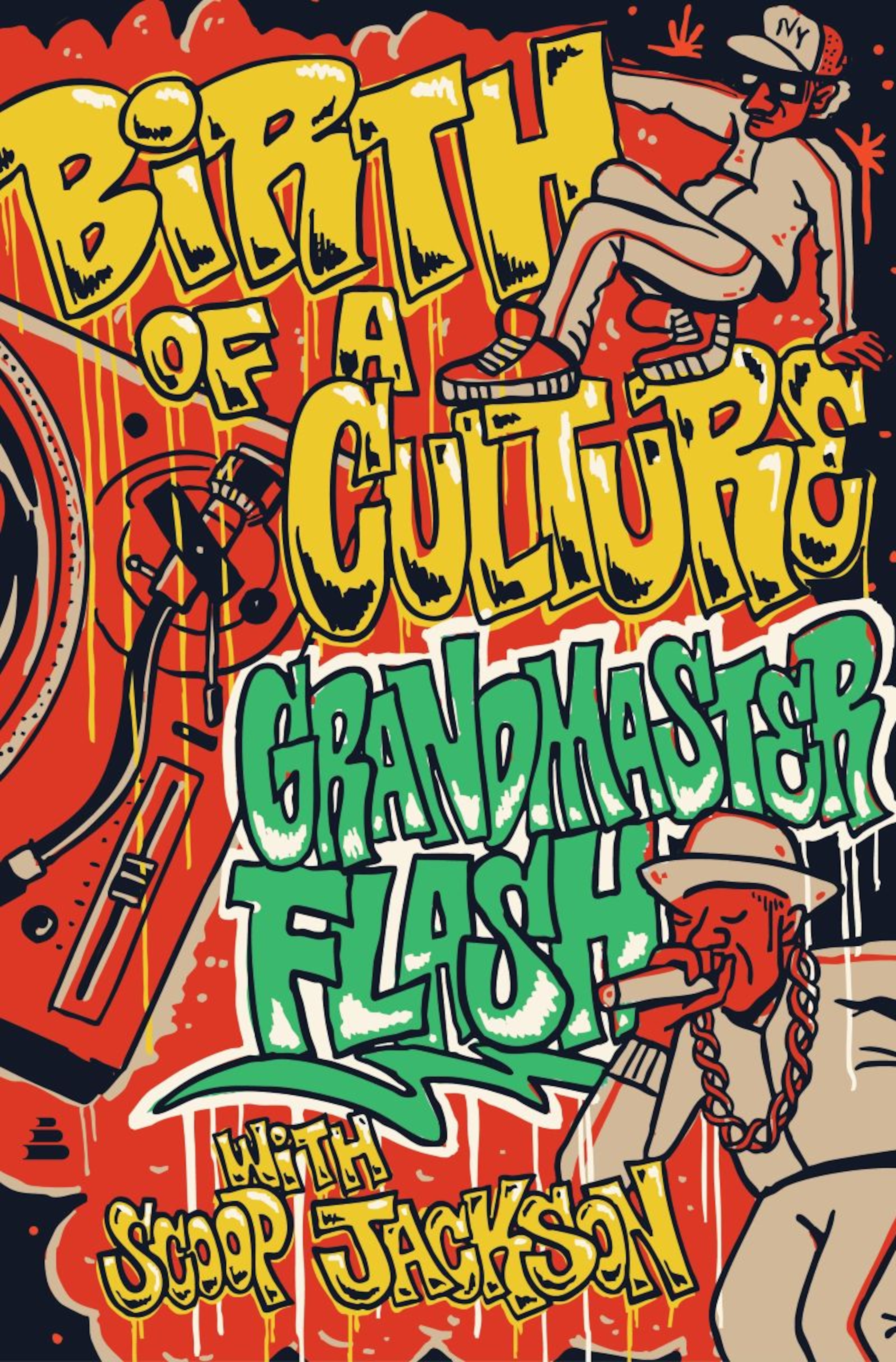
On Friday, the hip-hop pioneer will be at Atlanta’s Tara Theatre for a signing and discussion of his new book, “Birth of a Culture,” co-written with cultural critic Robert “Scoop” Jackson.
Atlanta radio personality Frank Ski will moderate the conversation, followed by a screening of “Wild Style,” the 1983 film about New York’s emerging hip-hop culture.
The book, released Tuesday, chronicles Saddler’s experiences during hip-hop’s rise while breaking down the techniques and experimentation behind his work.
For Saddler, that means explaining hip-hop as music and invention.
“I want the world to know that we are also scientists, mathematicians and to understand that the sky is the limit on how you can create things from nothing,” Saddler said. “These were intelligent people that helped put these pillars together so that it could transcend.”
The science behind the turntables
Saddler also said knowing breaks in songs helped him appreciate all types of music.
“When I got into the math, science and kinetics of it, it took away race, creed, color and location from where the record was produced,” he said. “All I was concerned about was if the drummer got his moment for four bars.”
“Birth of a Culture” isn’t Saddler’s first book. In 2008, he co-wrote “The Adventures of Grandmaster Flash: My Life, My Beats” with biographer David Ritz.
For Saddler’s second book, he was more involved in structuring the story. He worked with Jackson to organize his memories alongside a broader history of hip-hop, including developments that came after his earliest innovations.
“For the first one, I really didn’t have say so on the format. He (Scoop) helped with some of the history but also on how it should flow for the reader,” he said. “He was also able to fill in things that maybe I didn’t know, so it’s mentally digestible for all ages.”
Throughout the book, Saddler breaks down his techniques, shares playlists spanning genres and recounts his experiences navigating music industry politics and talking with rappers, songwriters and producers about their journeys in hip-hop.
For Ski, who met Saddler in 2013, the book offers another opportunity to hear the story directly from someone who helped create the culture.
“Flash helped bring the DJ to the forefront and showed the world what could happen when someone took two turntables and changed the way we hear music,” Ski said. “With his new book, I get to sit with a friend and ask him about the story behind it all.”

The DJ matters
Next year, Saddler is set to receive a star on the Hollywood Walk of Fame, an honor he sees as recognition not only of his career but of the role DJs have played in shaping popular music.
“Most of the people on there are either rappers, singers and musicians,” Saddler said. “It means the DJ matters in mainstream media now. We’re musicians, too, but we do it with a turntable.”
Saddler has spent much of his career demonstrating what could be done with that instrument.
In 1982, his group Grandmaster Flash and the Furious Five released “The Message,” one of the earliest rap records to graphically depict life in the inner city.
They became the first hip-hop act inducted into the Rock and Roll Hall of Fame in 2007, and “The Message” entered the Grammy Hall of Fame four years later.
His knowledge of hip-hop and its history eventually took Saddler beyond the turntables.
In 1997, Saddler became the musical director of HBO’s “The Chris Rock Show” for five seasons. The role that gave him freedom to draw from his broad musical tastes.
“He (Chris) gave me so much leeway to pick any songs I wanted to open the show and walk the artists on,” Saddler said.
In 2016, Saddler was invited by filmmaker Baz Luhrmann to serve as a consultant and producer for Netflix’s “The Get Down,” a series about hip-hop’s early days in New York.
Saddler said he rejected other opportunities to work on projects about hip-hop because he wasn’t convinced they would treat the culture with care.
“We would get calls from all types of people wanting me to help with films, and it was always some crap,” Saddler said. “Baz takes simple material and glorifies it, and he definitely put the Bronx on the map.”
Still experimenting
More than five decades after he began experimenting with turntables, Saddler is still looking for new ways to work with music and technology.
In 2022, he launched QMT Radio, a livestream named after his Quik Mix Theory that allows him to broaden his audience.
“It keeps me musically and visually in front of people no matter where I am,” he said.

Saddler hopes to connect with youth programs and electronics companies to build apps or hardware. He also wants to organize a tour featuring DJs.
It all leads back to the curiosity that started with his father’s record collection and a kid trying to figure out what he could make with two turntables.
“I’m a scientist, a geek and a DJ,” Saddler said. “So all things are possible.”
Grandmaster Flash’s “Birth of a Culture” Book Signing and “Wild Style” Screening. 7 p.m. Friday, Sept. 25. Tickets are $16.49-$46.48. Tara Theatre, 2345 Cheshire Bridge Road NE, Atlanta. taraatlanta.com