
Georgia Tech scholar brings writer Octavia E. Butler to new audiences

Susana Morris remembers searching for science fiction and fantasy novels written by writers of color.
It was 1996 in Lauderdale Lakes, Florida. Morris was regularly catching the bus to public libraries across Broward County. As she walked through aisles and read excerpts, she felt the stories and characters reinforced stereotypes.
“I loved all the nerdy stuff — lords, spaceships, knights and fairies — but I was feeling disillusioned because I never saw any Black folk in those books, and even if we were hinted at, we were villains, ogres or orcs,” Morris told UATL.

Then, Morris came across “Parable of the Sower,” a novel written by Octavia E. Butler published in 1993 about an empathetic Black teenage girl in the 21st century who encounters greed, climate change and inequality in her community.
At the Lauderdale Lakes Public Library, Morris found her muse.
“My whole world opened up, because we were not reading science fiction or books by Black people in my high school. I felt witnessed and seen as this Black girl with really big ideas,” Morris, 46, said.
Morris realized Butler pioneered incorporating race, gender inequality, environmental justice, and created diverse audiences in speculative fiction.

Morris, a Georgia Tech associate professor and scholar, is hosting 50 Years of Octavia E. Butler: A Daylong Symposium, a free conference honoring the novelist’s work at the Historic Academy of Medicine on Feb. 24. Held on the same day as Butler’s passing 20 years ago at age 58, it features student presentations, art exhibits, panel discussions featuring Butler’s biographers, and keynote speeches.
The symposium also celebrates “Patternmaster,” Butler’s 1976 debut novel about the son of a ruler battling his brother for control of civilization. It spawned Butler’s “Patternist” series including “Mind of My Mind,” “Wild Seed” and “Clay’s Ark.”
Morris, who received a Mellon Foundation grant to produce the symposium, wants to make Butler’s work accessible.
“I wanted to throw something in her honor and celebrate a visionary mind. We’re going to talk about what it means to have a life so rich and varied as hers, so you don’t have to be a scholar but someone who is curious,” Morris said.
Throughout Butler’s literary career, she released 13 novels and pioneered Black women science fiction writers. “Kindred,” the prolific novelist’s seminal work published in 1979 about a Black writer in an interracial marriage who time travels to the antebellum South, was adapted into a graphic novel and television series on Hulu.
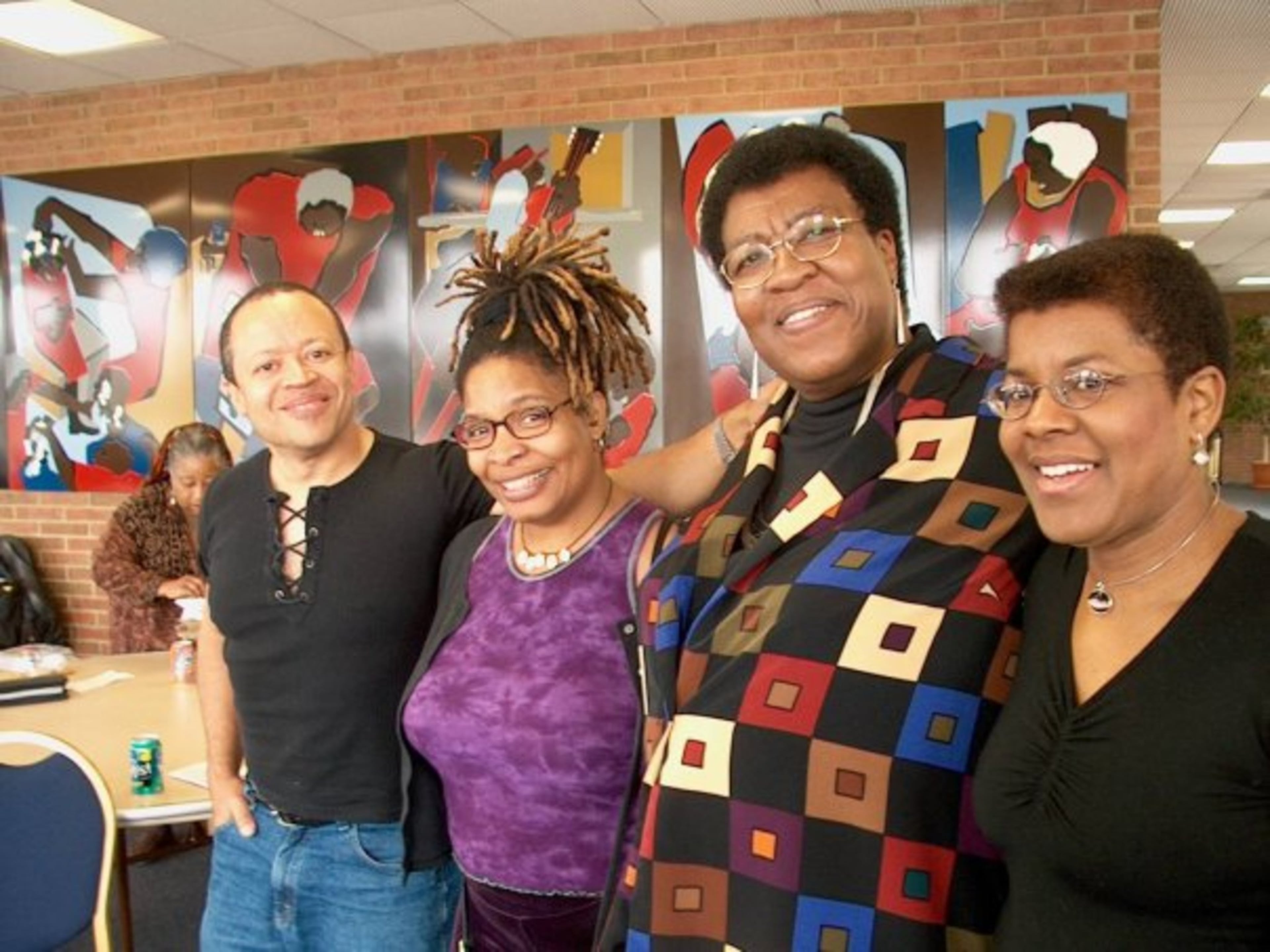
Butler, who confronted global warming, womanism and how Reaganomics affected social programs in the 1980s in her books, received a MacArthur Fellowship in 1995 and was later inducted into the Science Fiction Hall of Fame.
“She carved out a space where she wasn’t supposed to be. She was warning us, hoping things in our society wouldn’t happen, and showing us the possibility from being in the not-so-distant past,” Morris said.

This semester, Morris teaches a course on Butler Tuesdays and Thursdays. She assigns readings, has students compare film versions and connects politics and pop culture to Butler’s work during her lectures. Morris said she’s interested in how students connect to Butler’s otherworldly works.
“It’s about the modern reader, seeing how we can tell the stories differently and understand the past. It invites us to have empathy, understanding and grace for the people who are dealt very difficult circumstances,” Morris said.
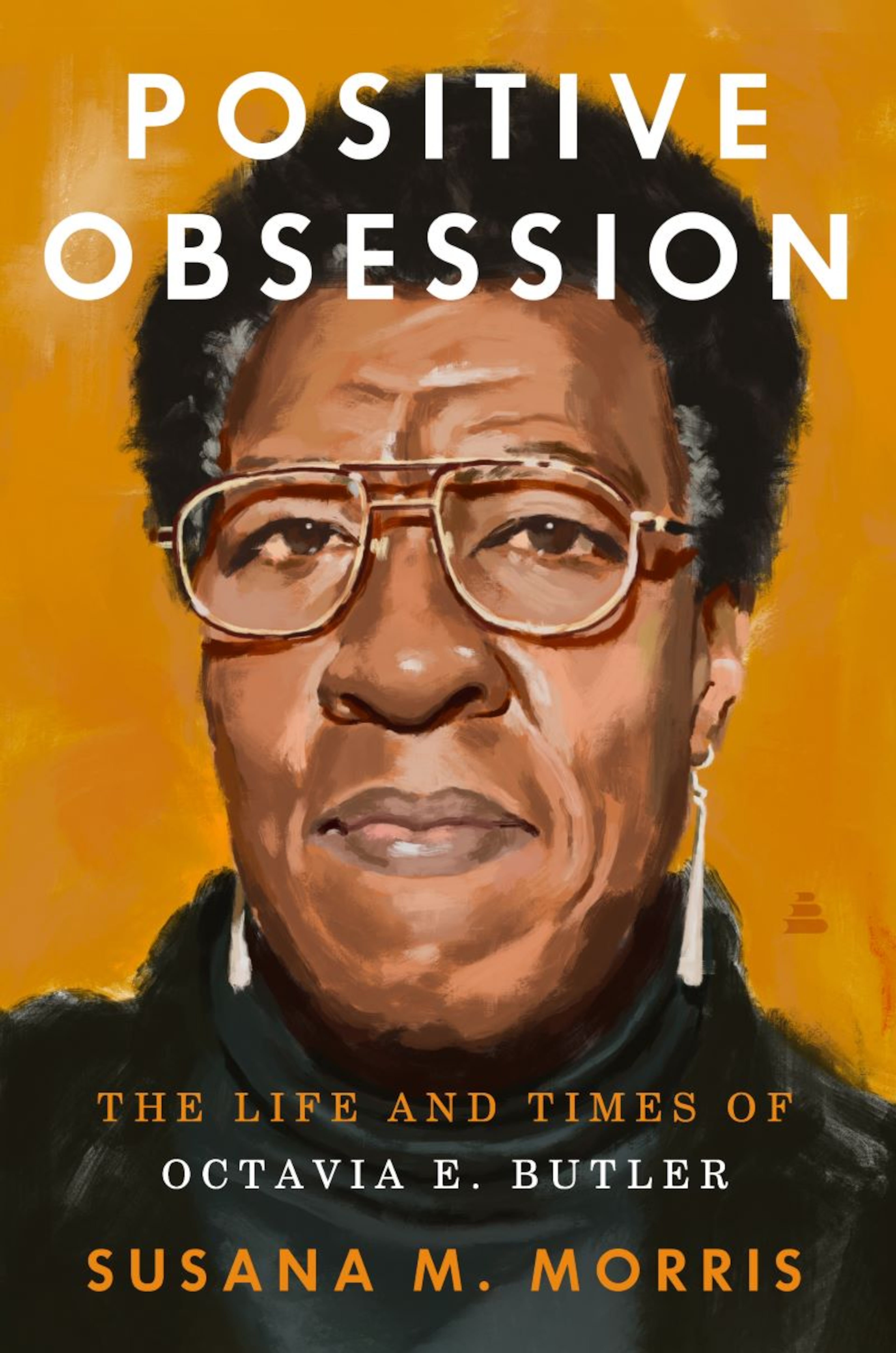
In August, Morris published “Positive Obsession: The Life and Times of Octavia E. Butler.” Morris spent five years researching, visiting Butler’s archives, and conducting interviews. She wanted to introduce readers to Butler’s creative process.
“The goal was to write a biography that would be for a general audience who wanted to know more about her life, and I was excited to produce something to hand off to my mama,” Morris said.
In 2007, Morris earned her Ph.D in English and women’s studies from Emory University. She held teaching positions at Spelman College and Auburn University.

In 2017, Morris joined Georgia Tech and became associate chair in the School of Literature, Media and Communication seven years later. She appreciates being part of an inclusive environment.
“I was in a more traditional English department (at Auburn), so my work was not always legible to people. Now, I’m around several of us who do science fiction or Afrofuturism,” Morris said.

Butler’s symposium arrives at a time when school districts ban books, Black women experience record unemployment and universities suspend diversity and inclusion efforts.
Morris hopes Butler’s work encourages critical thinking, engagement and productive citizenship.
“Her work is a cautionary tale, gives us a blueprint and asks readers to think about how to be in tune with their environment. Being intellectually curious does not simply belong to teachers and scholars,” Morris said.
“She was plugged in, invited us to be plugged in, and showed you too can recognize the patterns of how things happen.”

50 Years of Octavia E. Butler: A Daylong Symposium. 9 a.m.-5 p.m. Tuesday, Feb. 24. Free with RSVP. Historic Academy of Medicine, 875 West Peachtree Street NW, Atlanta. eventbrite.com
About the Author

Christopher A. Daniel is a Black Culture reporter for The Atlanta Journal-Constitution. He is an Atlanta-based, award-winning journalist, cultural critic and ethnomusicologist. He previously taught courses at Morehouse College, Clark Atlanta University and Georgia State University.