
Clyde Best: The ‘Jackie Robinson of England’ is coming to Atlanta
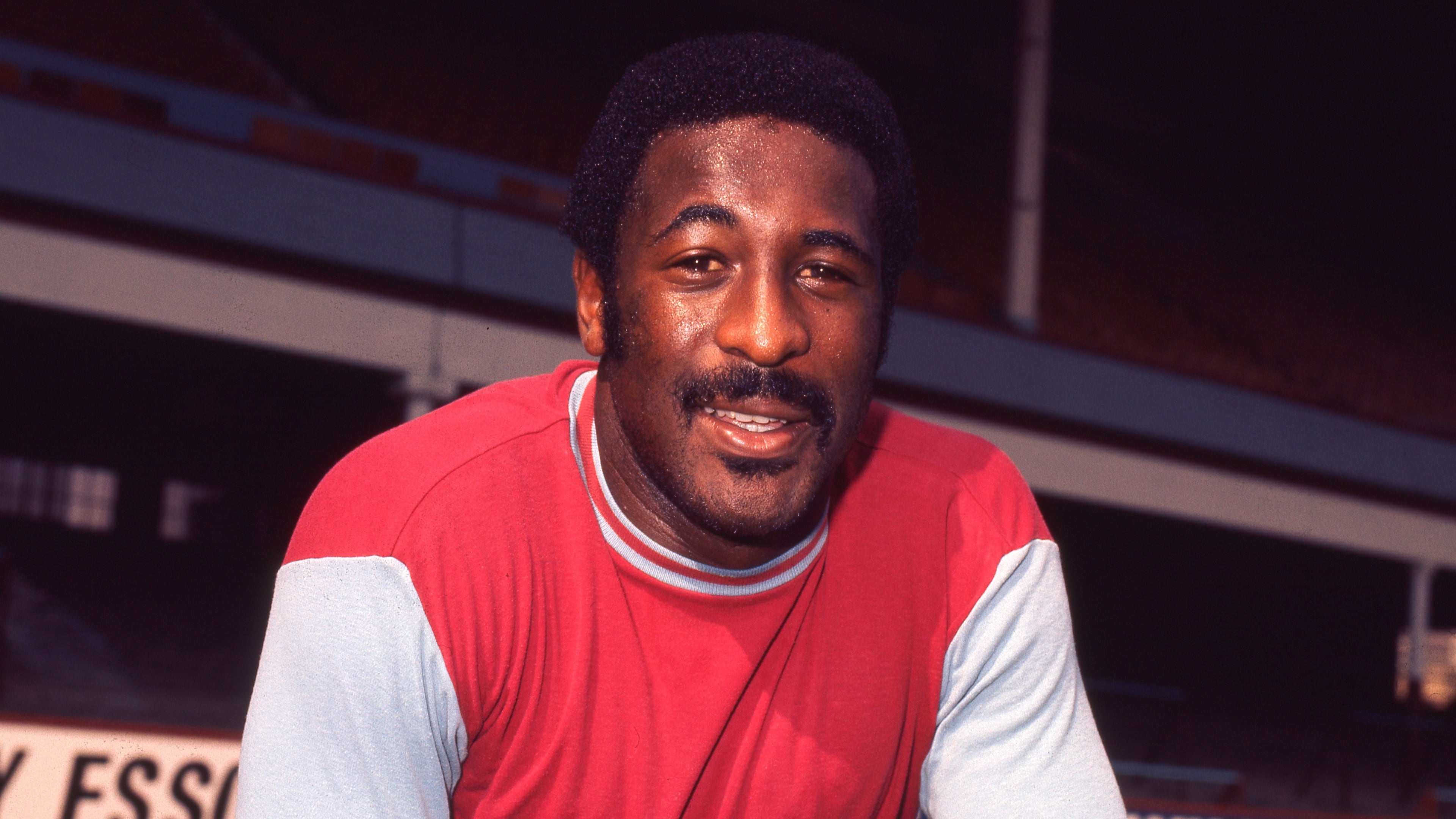
It’s two weeks into the 2026 FIFA World Cup, and football legend Clyde Best is talking about his mid-July trip to Atlanta. He loves the city, its rich civil rights history.
When he visits the city to share his story next week, it will serve as an ideal backdrop for one of sports’ lesser-known barrier breakers. During the 1960s and 1970s, Best rose to stardom in England’s Premiere League, overcoming racism and influencing generations after him.
As part of a national tour, and in partnership with the BronzeLens Film Festival, “Transforming the Beautiful Game: The Clyde Best Story,” will screen July 13 and 14 at Loudermilk Conference Center.
Sharing his story of using non-violence with sports to fight hate should resonate in the home of Martin Luther King Jr. Best recalls where he was when King was assassinated.
Just 17 at the time, living in his native Bermuda, Best was wrapping up a day off from school doing what he loves most: playing soccer. That’s when the news came down.
“It was devastating, because it was a great man and one of the strongest human beings that the Lord put on Earth, and look what he had to go through. I’m just glad that we’re able to bring something like this to Atlanta because it’s only fitting,” Best, 75, told The Atlanta Journal-Constitution.
There are parallels between the two men. Best, too, knows what its like to be an embodiment of grace under intense, racist pressure. Both received death threats. Both aimed to fight violence with peace. One used words. The other used his feet.
The film had its global premiere in London on March 26. It’s directed by documentarian Dan Egan. The film chronicles Best’s rise from promising young Bermudian football prospect to joining West Ham United in England’s Premiere League and breaking barriers as its first Black superstar.
At a running time of just over 90 minutes, we learn about the origin and lasting impact of Best. The film is narrated by actor Tony Head who opens by calling Best “the most impactful sportsman you never knew.”
“Even now, I’m mesmerized by the amount of people that didn’t know the story because I kept so much to myself and just went about doing the business that I had to do,” Best said.
Best and Egan hope their timing — showing an often untold story of a football legend during the 2026 FIFA World Cup, in a host city — will bring their film to more audiences.
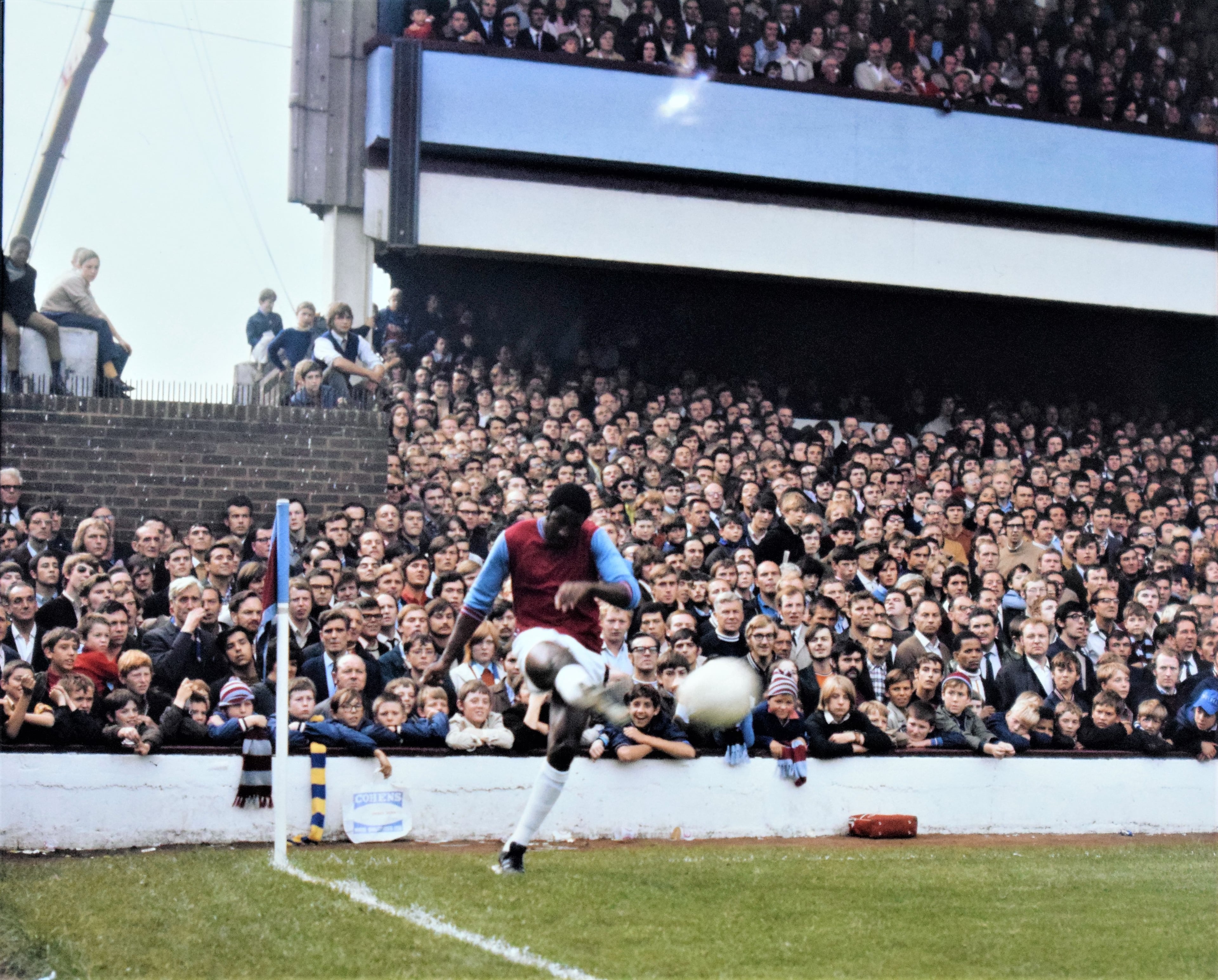
At 15, Best was a member of the Bermuda soccer team that finished second at the 1967 Pan American Games. He caught the eye of West Ham manager Ron Greenwood, who invited for a tryout.
When Best left Bermuda in 1968 to take his prodigious talents to London, it was at a time of heightened racial tension. Anti-immigrant rhetoric from political voices such as Enoch Powell were aimed at British newcomers from South Asia, the Caribbean and Africa.
Upon arriving he’s taken in by the multiracial Charles family, befriending sons Clive and John. The latter became West Ham’s first Black player in 1963.
Best joined a West Ham team that included a trio of stars — Sir Geoff Hurst, Bobby Moore and Martin Peters — from England’s 1966 World Cup-winning squad. He made his team debut three years later alongside Hurst.
From 1968 to 1976, Best became one of West Ham and the Premiere League’s biggest stars. He scored 58 goals in 218 appearances.
Throughout his time on and off the pitch in England, Best suffered through racist trauma: fans hurling bananas at him, a chorus of monkey chants following, at rival stadiums. That treatment came from his own fans as well.
“Transforming the Beautiful Game” also digs into a moment where a fan threatened to pour acid on Best in a match, which led to his teammates forming a human shield around him as they walked out onto the pitch.
There was also a 1972 match against Everton, where a cacophony of monkey chants directed at Best finally led him to snap. He got even in the most Clyde Best way possible: single-handedly scoring a goal, leading his team to victory.

Looking back at his life replayed for others to see, Best explains why he didn’t quit.
“It was difficult times, but it wasn’t difficult enough to make me want to quit. I mean, that was never going to happen,” he said, adding that his father helped him see a bigger picture.
“You’re not playing for yourself, you’re playing for all those people coming after you,” he said.
Those future generations knew they were watching something revolutionary: A Black man becoming the biggest star of football’s toughest league.
In 1970, Best and West Ham took on Pelé’s Santos squad in a friendly. The GOAT and his Bermudan counterpart scored all of their teams’ goals in a 2-2 tie.
Afterward, Brazil’s legend had a message for his young opponent.
“Clyde, you’re the prince and I’m the king,” he told Best.
“I had no problem with that coming from the master himself,” Best said.
On Easter Sunday in 1972, Best — along with younger players Ade Coker and Clive Charles — made history, becoming the first Black trio to start for a Premiere League team.
Three years later, Best made the move to America. He joined the Tampa Bay Rowdies of the North American Soccer League. Best led the Rowdies to a Soccer Bowl win in 1975. He later achieved legend status for the Portland Timbers, which now plays in Major League Soccer.
It’s overcoming odds to achieve these moments that has friends and family calling Best the “Jackie Robinson of England.” It was a phrase commonly said to the film’s director, Egan.
Egan grew up playing soccer with Best’s nephew, Jerry Best. He built a relationship with the family throughout their lives. Six years ago, he approached Jerry’s uncle with the idea.
“What I see in Clyde is that, that when you pressure someone, you get what’s inside of them. And at this extreme pressure, what came out of Clive Best was goodness, and that’s enough reason to tell the story,” Egan said.
Best’s tie to the Charles family is deserving of its own Hollywood treatment, Egan said. Clive Charles went on to become one of the most famous Black soccer coaches in America, coaching for U.S. Soccer. All roads lead back to Best.
“It’s rare to find an untold story, and it’s rare to find a story that has connections that are multicultural,” Egan said.
The film tells stories of Black players who set forth paths for Best, and those who followed in his. It also looks at his impact on soccer in the United States.
Before the U.S. Men’s National Team’s 4-1 thrashing by Belgium, Best pegged them as his dark horse to win it all. He likes where the sport is headed here.
When asked about moments of racism in football still happening worldwide, years after he literally kicked his way through them, his response is measured. “I think associations need to be tougher on punishment,” he said.
Present-day challenges, if not addressed, present future problems.
“I’m worried about the people coming up. Those are the ones that we have to be mindful of and care for, because they’re going to be running the world and the countries one day,” he said.
What those next generations have are examples like Best.
“When I looked today and see the people of color playing football worldwide, it makes me feel good because I know I had a part to play in that sort of stuff,” he said, though he’s quick to celebrate his idols, Pelé and Eusébio, aka “Black Panther.”
“It was nice to be able to pick up the mantle from them and continue doing what we needed to do.”
IF YOU GO
“Transforming the Beautiful Game: The Clyde Best Story” Screening and Q&A
7:30 p.m. Sun., July 13 and Mon., July 14. $24.50-$60. Loudermilk Conference Center. 40 Courtland St. NE, Atlanta. clydebest.shop.