
Can a modern Black Wall Street still succeed in Atlanta?
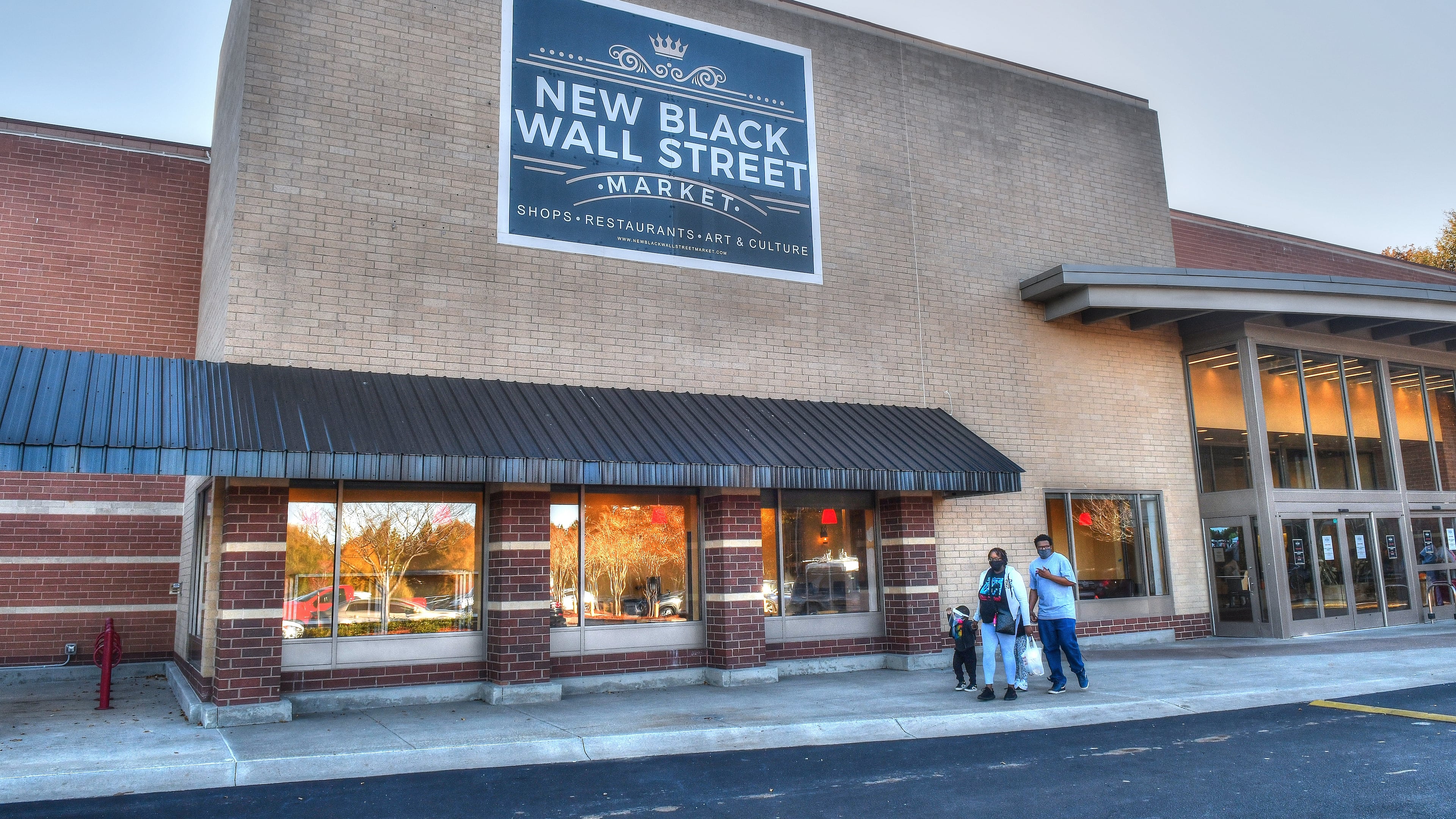
Four years ago, an entrepreneur in Stonecrest opened The New Black Wall Street Market with an ambitious goal: to honor one of the greatest symbols of Black economic success in American history while creating a modern home for more than 100 Black-owned businesses.
The reality proved far more difficult than anticipated.
The market closed in April after years of complaints about poor management, water damage and dwindling customers.
But its rise and fall raise a larger question: Can a modern Black Wall Street still survive in Atlanta?
“We have to understand that how we move forward can’t just be about comparing our money to their [white people’s] money,” Maurice Hobson, author of “The Legend of the Black Mecca: Politics and Class in the Making of Modern Atlanta,” said. “It has to be, how do we leverage our power and our economic strategy that will best benefit our people?”
Historians, business owners and community leaders say it can — but only if today’s Black entrepreneurs stop trying to re-create the economic conditions that made Tulsa’s Greenwood District thrive a century ago and instead adapt to today’s marketplace.
That question carries particular weight in Atlanta, a city long celebrated as the nation’s Black Mecca because of its concentration of Black political leadership, historically Black colleges and universities and entrepreneurial culture. If it can succeed anywhere, many believe, it should be here.
To understand why Stonecrest struggled, you first have to understand why Greenwood succeeded — and why those conditions no longer exist.
The New Black Wall Street Market was never intended to be just another shopping center.
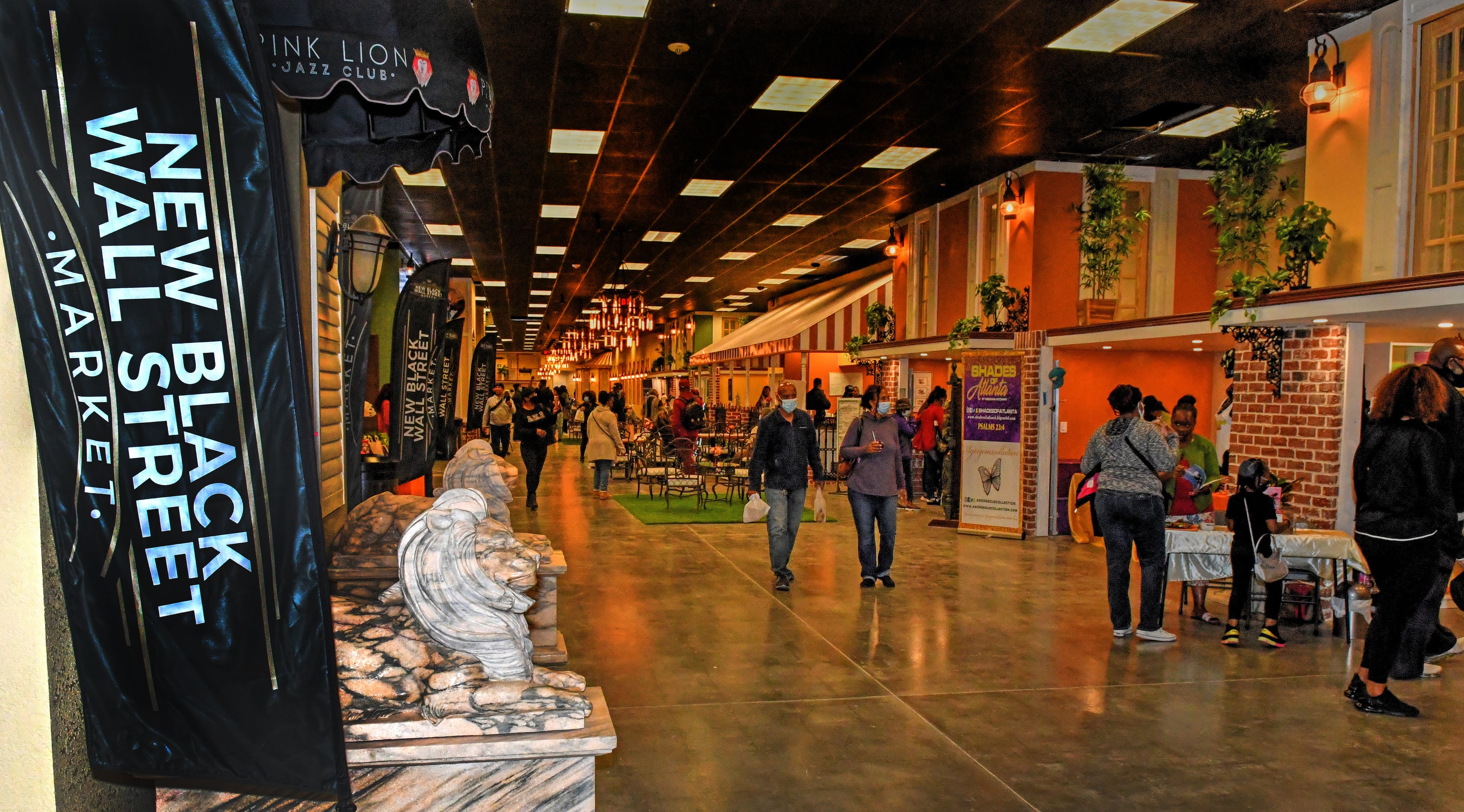
Conceived as a centennial tribute to Tulsa’s historic Greenwood District, it was designed to celebrate its legacy of Black entrepreneurship while creating a marketplace for more than 100 entrepreneurs.
Its founders hoped the project would prove that Greenwood’s entrepreneurial spirit could flourish again in Atlanta.
The history
By 1921, Tulsa’s Greenwood District had become one of the nation’s most prosperous Black business communities. More than 190 Black-owned businesses filled 35 square blocks, including banks, hotels, restaurants and retail stores — earning Greenwood the nickname “Black Wall Street.”
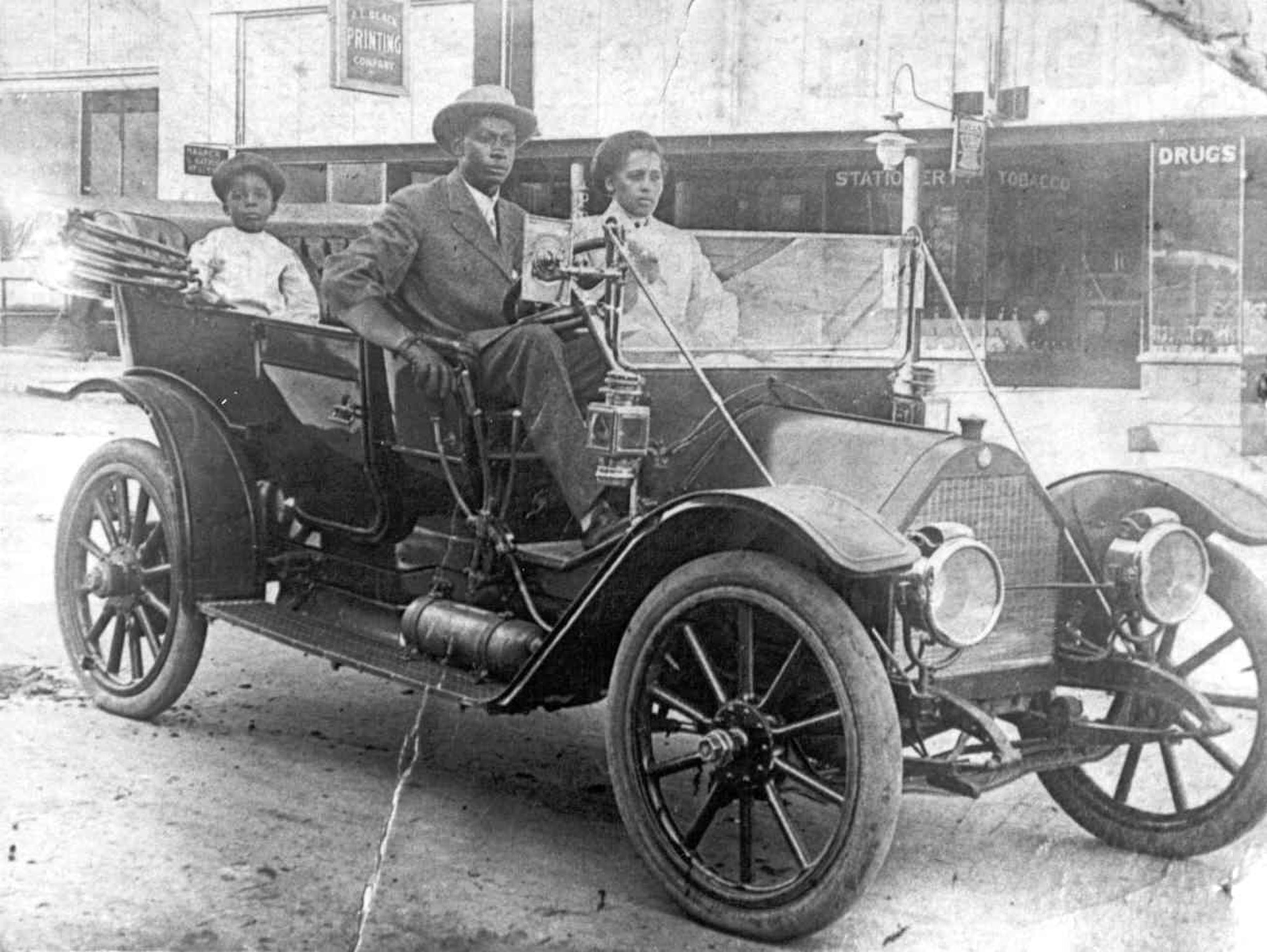
“Black Wall Street is a general term that really refers to the commercial character of the Black community in Tulsa, the Greenwood District,” said historian Hannibal Johnson. “It’s not really a reference to investments and banking and all those things we associate with Wall Street in New York.”
Johnson, author of “Black Wall Street: From Riot to Renaissance in Tulsa’s Historic Greenwood District,” added that the idea could have been labeled “Black Main Street” because it better reflected the businesses in the district.
“Black Wall Street is a name that was given later, nobody called it that in the 1910s, 1920s or 1930s,” said author, historian, and Tulsa native Scott Ellsworth. “It was a segregated neighborhood in 1921 Tulsa with about 100,000 people, 10,000 of them being African American.”
Greenwood was one of several thriving Black business districts during segregation, alongside communities such as Chicago’s Bronzeville, Durham’s Hayti and Richmond’s Jackson Ward.
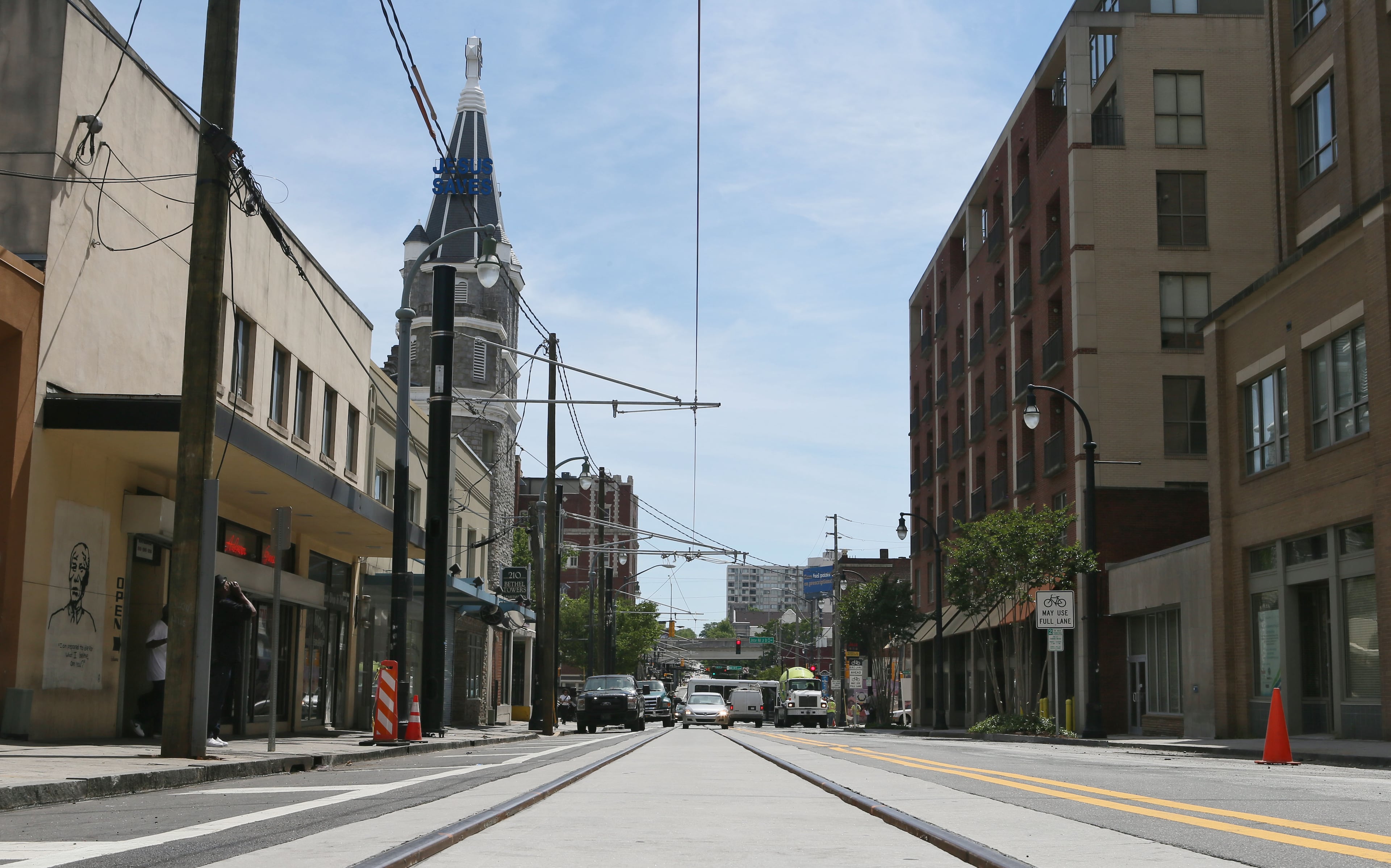
One of the most prominent was Atlanta’s Sweet Auburn District, where Auburn Avenue was referred to as “The Richest Negro Street in America.”
The Tulsa massacre
On May 31, 1921, a false accusation against a Black teenager named Dick Rowland sparked one of the deadliest acts of racial violence in American history.
After 17-year-old white elevator operator Sarah Page claimed Rowland had grabbed her arm, rumors quickly escalated into allegations of attempted rape.
Although Page declined to press charges, a white mob descended on Greenwood, destroying homes and businesses while law enforcement failed to stop — and in some cases participated in — the violence.
Historians estimate that hundreds of Black residents were killed, thousands were left homeless and nearly $17 million in damages was left behind.
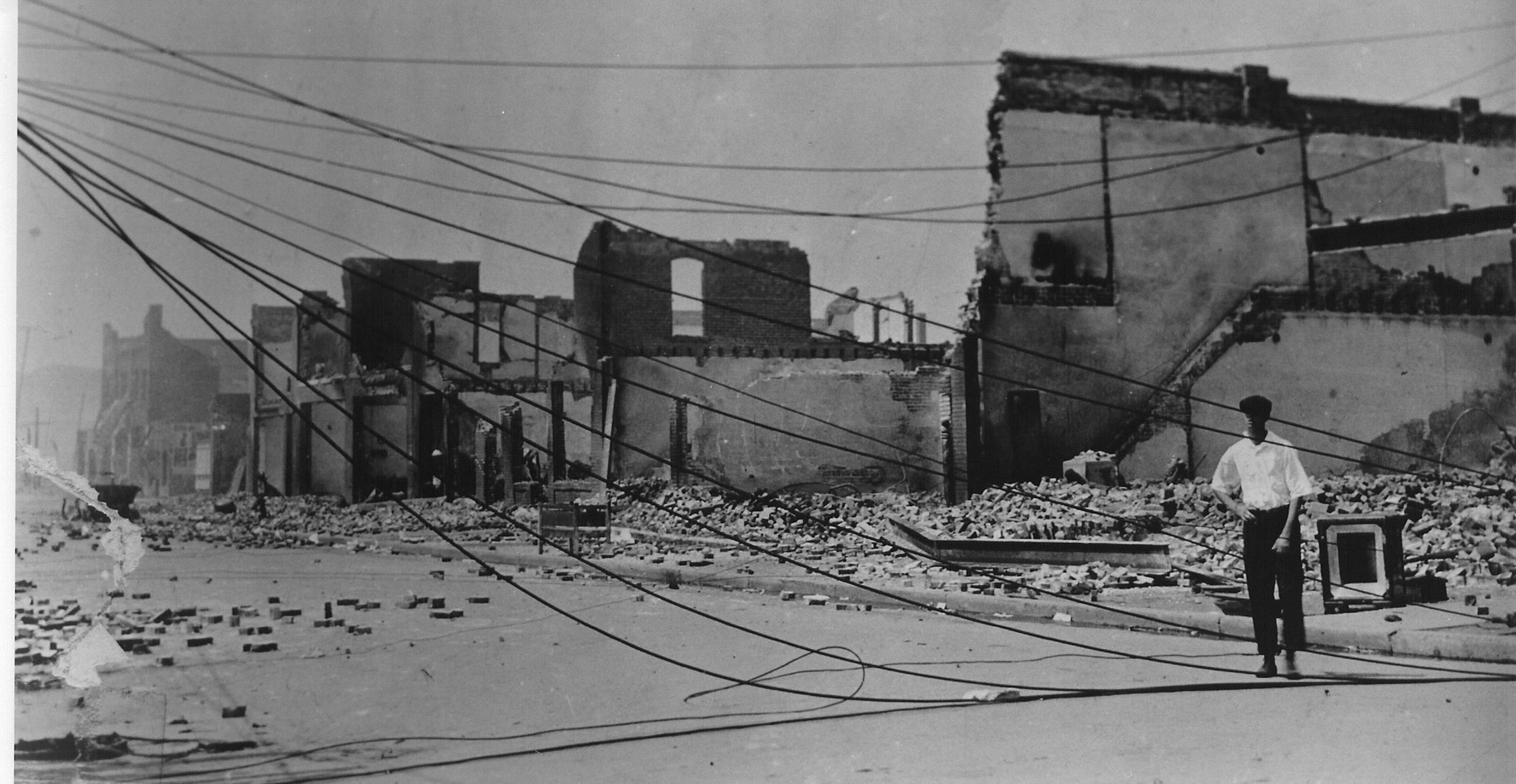
“Part of the impetus for buying Black in this case was necessity,” Johnson said. “But supporting our own businesses and commerce was really important. Cooperative economics was one way to think of it.”
Hobson, the chairman of the Africana studies program at Georgia State University, said segregation, while oppressive, also concentrated Black dollars within Black communities.
“The reason Black Wall Streets had been able to flourish was because of segregation,” he said. “It was because of pooling all of our resources into particular locations to support the Black community.”
While desegregation expanded opportunities for Black Americans, Hobson said it also opened Black-owned businesses to greater competition.
The New Black Wall Street Market
A century later, Stonecrest tried to re-create Greenwood’s success.
For Kimberly Greene, it felt like the beginning of something much bigger.
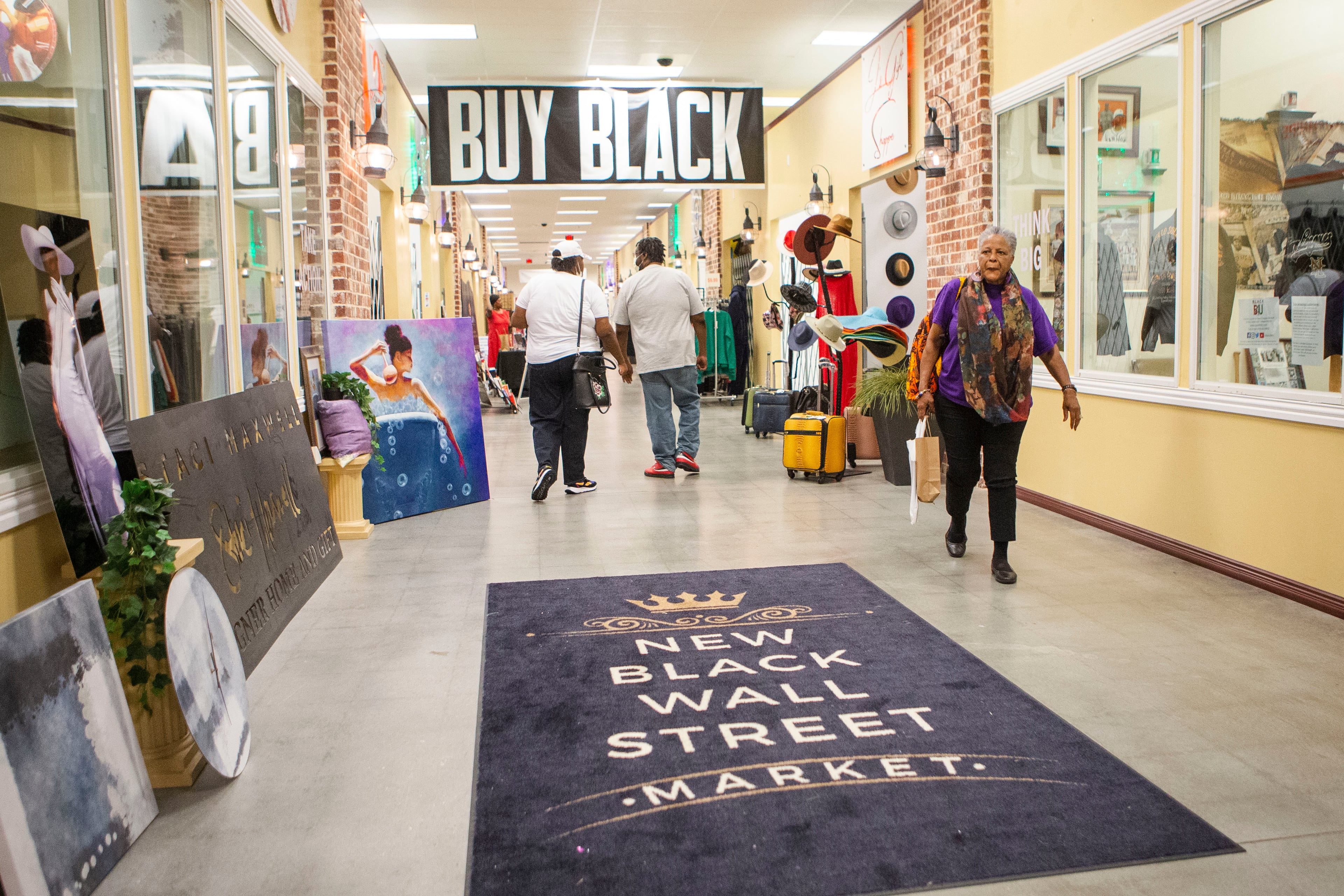
The founder of BlackB4U — an apparel company that celebrates the history of the Negro leagues in professional baseball, Buffalo Soldiers and Tuskegee Airmen — planned to spend only two weeks at the market during a Black History Month pop-up.
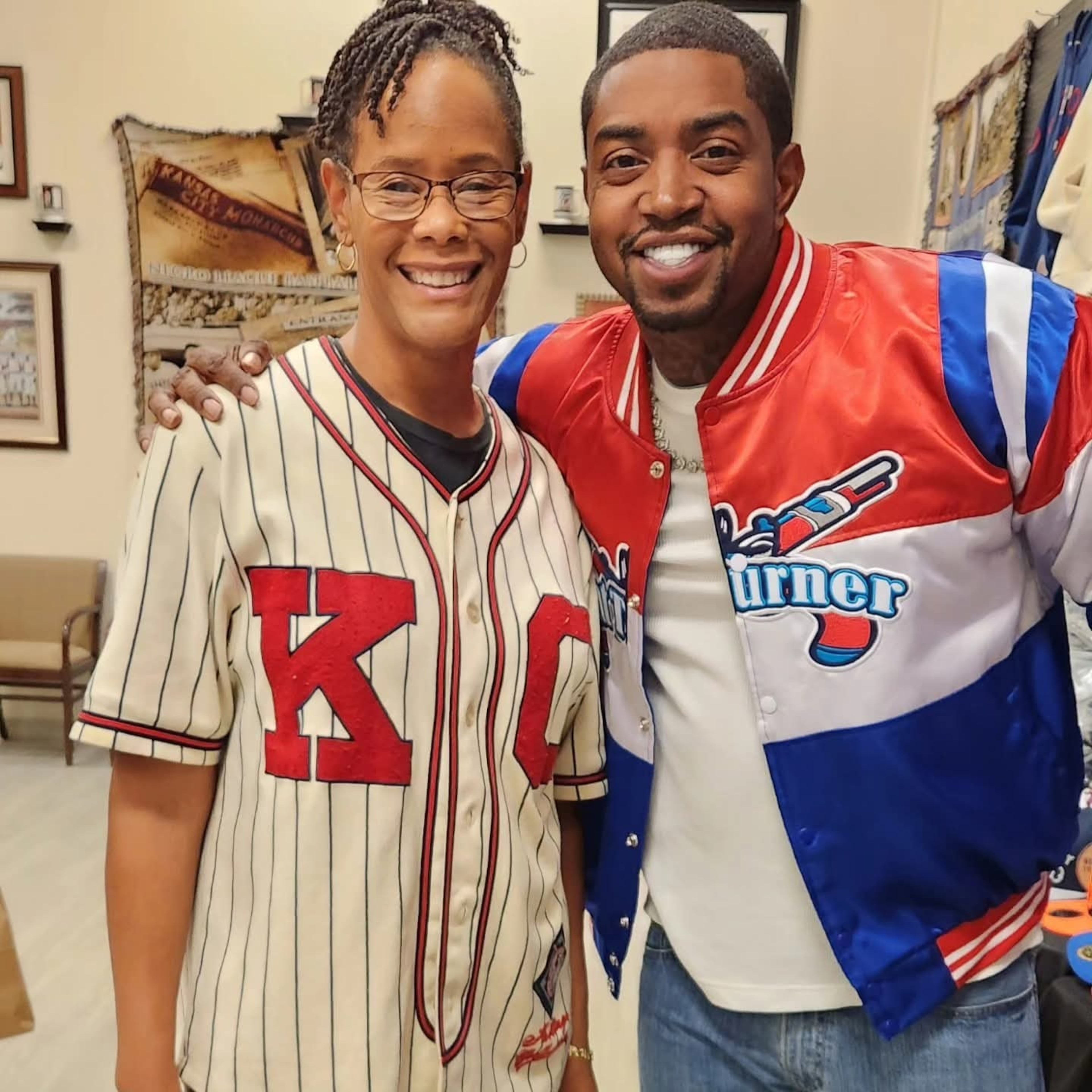
She stayed for nearly three years, drawn by the early crowds and camaraderie among the business owners.
“Every shop was full, there was music playing, the building was packed, and just the energy, it was like we’ve got to be a part of this,” she said. “So we were there for two weeks, and we were doing really well, so we’re like let’s stay a little bit longer.”
That was exactly what founder Lecester Bill Allen envisioned.
In 2021, Allen transformed a vacant Target into a 125,000-square-foot marketplace with space for more than 100 vendors.

He envisioned it as the first phase of a proposed $700 million “International Village” development in south DeKalb County, including a 16-story hotel intended to help make the area a tourist destination and a concentrated area for Black spending.
When the market opened, nearly all 118 vendor spaces were leased.
More than 10,000 shoppers walked through the doors during opening weekend.
For a moment, it looked as if Allen’s vision might work.
But Greene said the momentum didn’t last.
“After about six months, the advertising basically stopped and because it’s in Stonecrest, it’s not in a location where people are frequently traveling,” she said. “You either live there or you’re looking for something specific, but if you don’t know where the building is, you are not going to go.”
As customer traffic slowed, vendors raised concerns about management, marketing and maintenance. Water damage added to their frustrations.
By early 2026, only about 30 vendors remained.
By April, the market had closed.
If re-creating Greenwood’s success requires more than gathering businesses under one roof, what does it take?
A different marketplace
The challenges facing Black-owned businesses extend beyond location, advertising and customer traffic.
Today’s entrepreneurs face an economy vastly different from the one that produced Greenwood a century ago, reshaped by online shopping, national competition, changing consumer habits and shifting political priorities.
Greene said recent rollbacks of diversity, equity and inclusion initiatives have hurt parts of her business, particularly government contracts.
She chose not to renew a Pentagon contract because her Black history merchandise features the word “Negro.”
But Greene said the national debate over race has also created opportunities.
“To a certain degree, they’ve actually helped me because one of our catchphrases is our ‘Clothing creates conversation.’ We have this one jersey with all of the Negro leagues teams on the back and people will ask ‘What’s the Negro leagues,’” she said. “So now it creates a conversation and we’re still talking about it.”
What comes next
The rise and fall of the New Black Wall Street Market offers lessons about what went wrong in Stonecrest, and what future efforts must get right.
Chenee Joseph, president and CEO of the Historic District Development Corporation, said creating a successful Black business district requires businesses, customers, government agencies and nonprofit partners to work together.

“Nothing is working independently or on its own,” said Joseph, whose organization supports affordable housing and preservation on Auburn Avenue. “And if I’m supporting small businesses at different stages, you have to be able to meet them where they’re at if they’re going to be successful.”
The experts say the concept remains viable, but it requires far more than filling a building with Black-owned businesses.
Joseph said Atlanta already has many of the groups and resources needed to support Black business districts, but lacks a coordinated strategy.
“What is the city’s plan?” she said.
Hobson said increased competition has made it harder to keep Black spending within one community.

“The Black dollar is no longer concentrated how it needs to be. We’re talking about the competition of capitalism and how the market has been opened,” he said. “If there’s going to be a Black Wall Street that’s going to survive, it would be in Atlanta.”
Despite differing views on Stonecrest’s failure, the experts largely agree on what future efforts require.
Johnson emphasized sustainable commerce. Greene stressed visibility and marketing. Joseph called for institutional support. Hobson said entrepreneurs must adapt to a modern economy rather than re-create a century-old one.
The issue is not whether Atlanta has enough Black businesses. It’s whether the city can create an economic ecosystem that allows them to survive.
“We’re going to have to come up with a new plan,” Hobson said.