
Atlanta woman went looking for her father and found a brother.
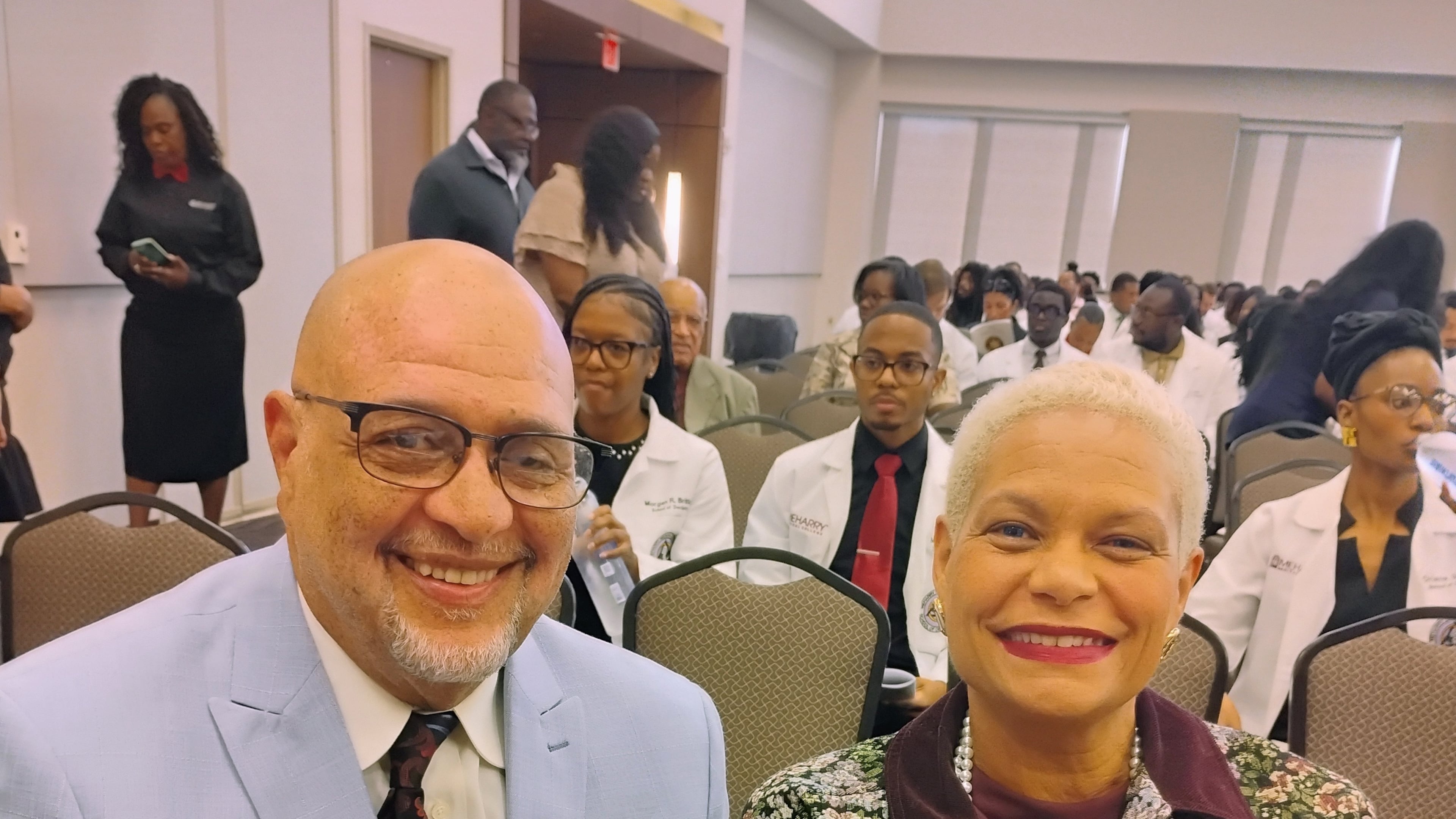
Lurelia. Hale. Freeman. Three names, two families united in a single person. This was who I was — or at least who I thought I was, until August.
The search began this past August when Meharry Medical College archivist, Jessica Hanson, called to invite me to represent my family at the college’s Opening Convocation in October.
While we were talking about convocation, it dawned on me that I might finally have access to information I had been searching for all my life. Anything about the father I knew in name only.
“Are you in the database right now?” I asked.
“Yes, actually I am.”
“Could you look up Junius L Taylor?”
And in a single search, there it was.
Dr. Junius LaFayette Taylor III, a 1970 graduate of Meharry’s School of Dentistry. She found his yearbook photograph and a letter he had written as editor. He was real.
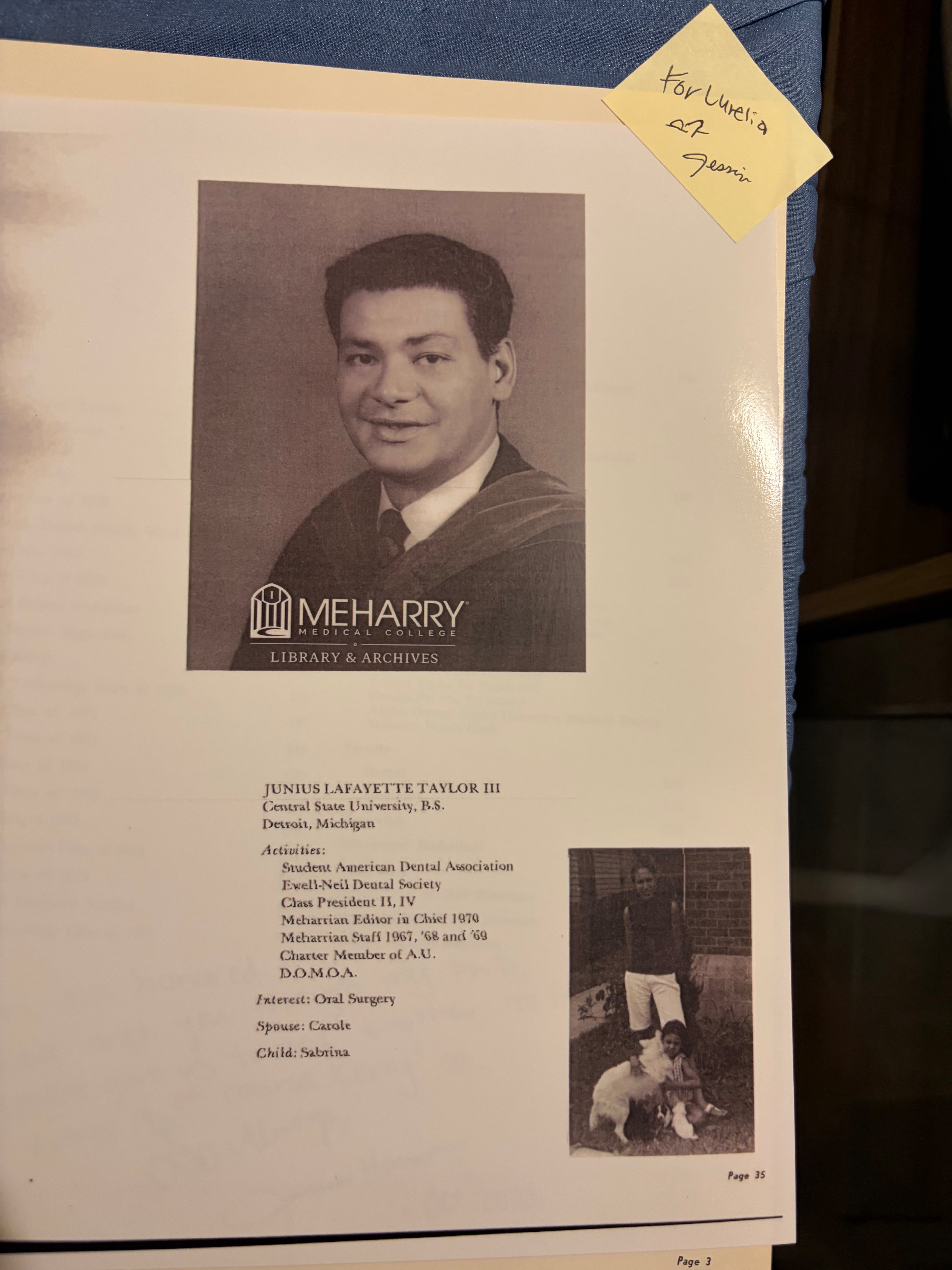
“Hold on, there’s another Dr. Junius L Taylor, Class of 1939. Apparently, he was your grandfather. Someone else had been searching for him, too.
“Here’s their Ancestry name …”
I am 57 years old, and my mother has been gone for more than 30. In the 24 years I had her, she had talked about my father only once, when I was 20 and about to give birth myself.
“All right already!”, my mother quipped. “His name was Junius Taylor and he was a dental student at Meharry.” And that was it.
Of course, with the advent of the internet, I had tried fruitlessly to find anything at all about him. Every few years I would try. Nothing. Once I had even gotten up enough nerve to call Meharry and ask for any information only to be shut down quickly because of privacy policies.
But now I finally had a lead, more than I’ve ever had. I sat there for a minute. Should I reach out to this person who was also looking for my father?
I had no idea how they were connected.
A brother I never knew I had
I began to type, “Good Afternoon-my name is Lurelia Freeman and I have been told that Junius L Taylor III was my father. I am trying to access information about siblings I might have. Can you help?”
When the answer came, only a few hours later, the first word was “Wow.” Then: “He is also my father.”
His name is Kerry Johnson.
Until that moment, I had not known I had a brother.

Days later, I met Kerry at his youngest daughter’s basketball clinic at Oglethorpe University in Brookhaven. We both had lived in and around Atlanta for roughly 25 years, without knowing the other existed.
We clicked immediately, laughing and talking as if resuming a conversation interrupted before either of us knew it had begun.
Three children, three surnames
I grew up a Freeman. Kerry grew up a Johnson. Kerry confirmed a faint recollection I had about a sister. He had found her through Ancestry as well in 2020. They were already a DNA match. He reached out to her then but had not heard back since. Our sister carries our father’s surname, Taylor. Three children, three surnames, connected by a father whose story each of us knew differently. I really didn’t care to know anymore.
Kerry, on the other hand, had other questions. He grew up knowing exactly who he was. Kerry wanted to know what our father was like, who his friends were, the jokes he used to tell.
He was comforted by our physical resemblance and shared disposition.
I wondered whether this will be enough.
We are both still fascinated and amazed by how much alike we are. He often talks about being afraid of being too much like our father.
In July, perhaps a week before our first contact, I nearly crossed paths with my niece, Kerry’s eldest, Milan, at a Barnes & Noble book signing for my Spelman sister, Tayari Jones’s novel, “Kin.”
Tayari had named a character Lurelia after me. Unknown to me, Milan, already a fan of Tayari’s work, was in the same room.
My name appeared in a book about kinship while unknown to me, my own niece stood only feet away.
In September, DNA confirmed that Kerry and I share a father. But we had already claimed each other. Once our DNA link had been established, we both reached out to our sister. Still nothing.
Finding family, discovering belonging
Finding Kerry changed how I searched the archives. The histories of Fisk University and Meharry Medical College revealed generations of connections between Nashville and Atlanta.

My grandmother, my unwed mother and I fled to Atlanta when I was a baby to avoid the probing questions about my parentage. They left behind the ties that bound our family to a place to forge new ones. Finding Kerry did more than give me a brother. It made me question who I thought I was, who I am now and who I might become.
Now I am also a sister, an aunt and, perhaps most profoundly, my father’s daughter — with all the rights, responsibilities and baggage that come with those identities.
There is something exhilarating and bewildering about discovering people who are simultaneously strangers and family.
Kerry and I share a father, but not a childhood. Moments occur daily that remind us of this. We both grew up on college campuses, but my mother and grandmother were professors while his grandmother had worked in the cafeteria.
His daughters, Milan and Jada, are my nieces, yet I am only beginning to know them.
How do you become someone’s sister without shared childhood memories? How do you become an aunt to nieces whose lives unfolded without you? And how do they make room for you?
Just before our trip to Nashville for the convocation, Milan and I attended a performance of “Fences.”
The play by August Wilson is also a story about how one defines family. We bumped into one of my former Spelman professors who knew about my search and asked, “So, did you find out yet?”
I proudly introduced Milan. “Yes. This is my niece.”
The words came naturally. The feeling was still astonishing.
When Kerry and I walked Meharry’s campus together this past fall, we stood where generations of our family had studied and worked.
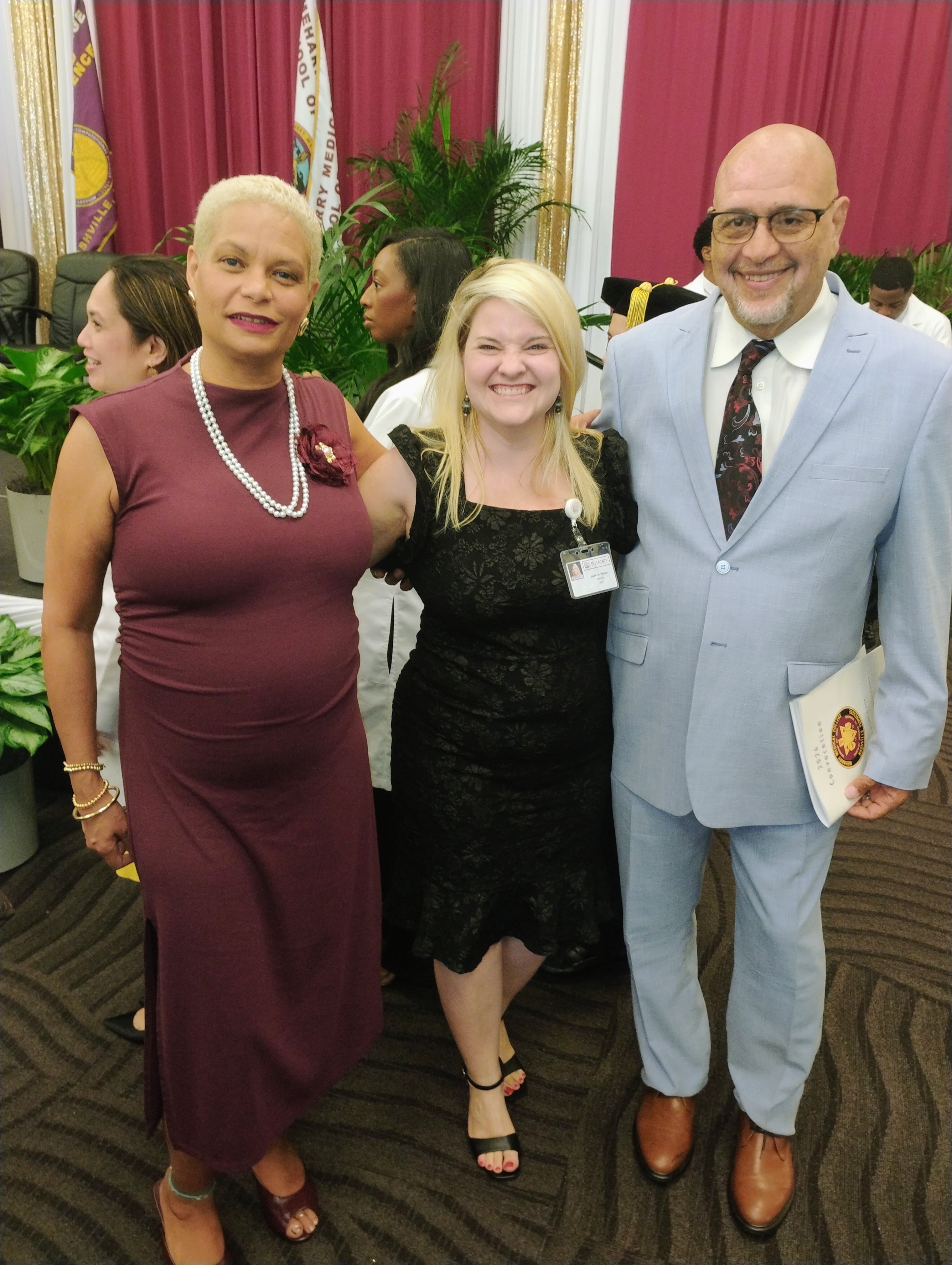
Finding family is not the same as knowing family. DNA establishes a relationship; it cannot teach us how to belong to one another. That requires patience, vulnerability and the willingness to welcome someone into a life already in progress.
Perhaps homecoming is not simply returning to where you belong. Perhaps it is discovering that belonging itself can change.
And it is more than Homecoming.
Because sometimes the archive preserves what was.
Sometimes it shows us what we missed.
And sometimes … sometimes it gives you family back.
About the author: Lurelia H. Freeman is a proud Spelman College alumna, Atlanta educator and family historian exploring identity, family and the legacy of HBCUs. She revels in her newest identities, including being Kerry’s sister, Tatiana’s mom, Marlena’s Nana, Jada and Milan’s aunt, and Junius’ daughter — proof that even at this stage of life, your family tree can surprise you with a few unexpected promotions!
Follow UATL on Facebook, on X, TikTok and Instagram.