
NABJ’s ‘Thumbs Down Award’ came for Stephen A. Smith. He came to Atlanta to tell his side.
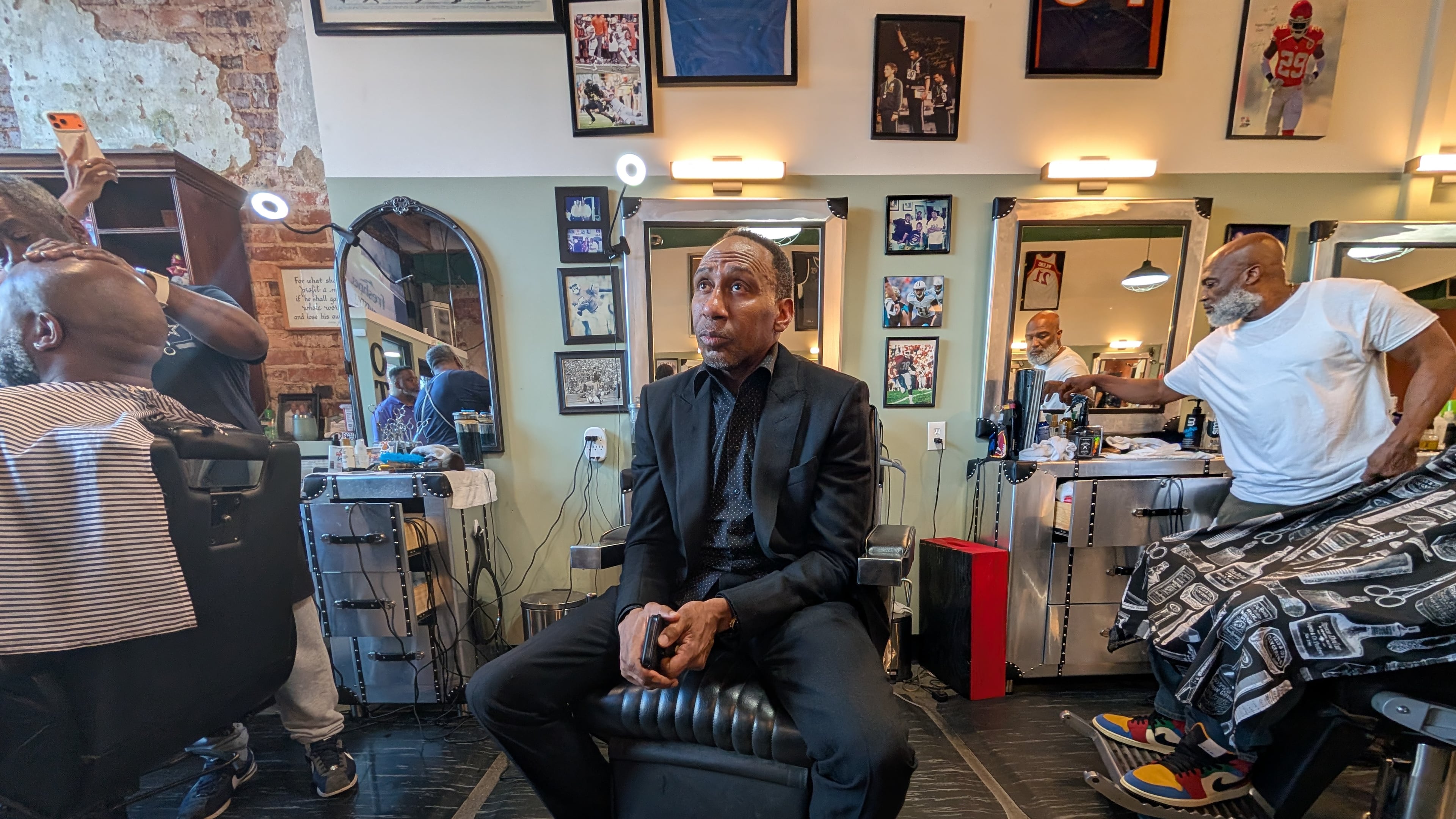
On any given day at Off The Hook Barber Shop, heated debates are as common as crispy fades and razor-sharp shaves.
Inside the Castleberry Hill shop, conversations can bounce from politics to sports, relationships to music, with customers weighing in from barber chairs and waiting-room seats.
So when Stephen A. Smith walked through the door on a recent Friday afternoon — having just met with Democratic gubernatorial nominee Keisha Lance Bottoms, whom he is backing in her race against Republican nominee Rick Jackson — he fit right in.
Dressed in all black, one of sports media’s most recognizable voices quickly eased into debate mode in the barbershop, which he had been referred to by NFL Hall of Famer Shannon Sharpe and political strategist Tharon Johnson.
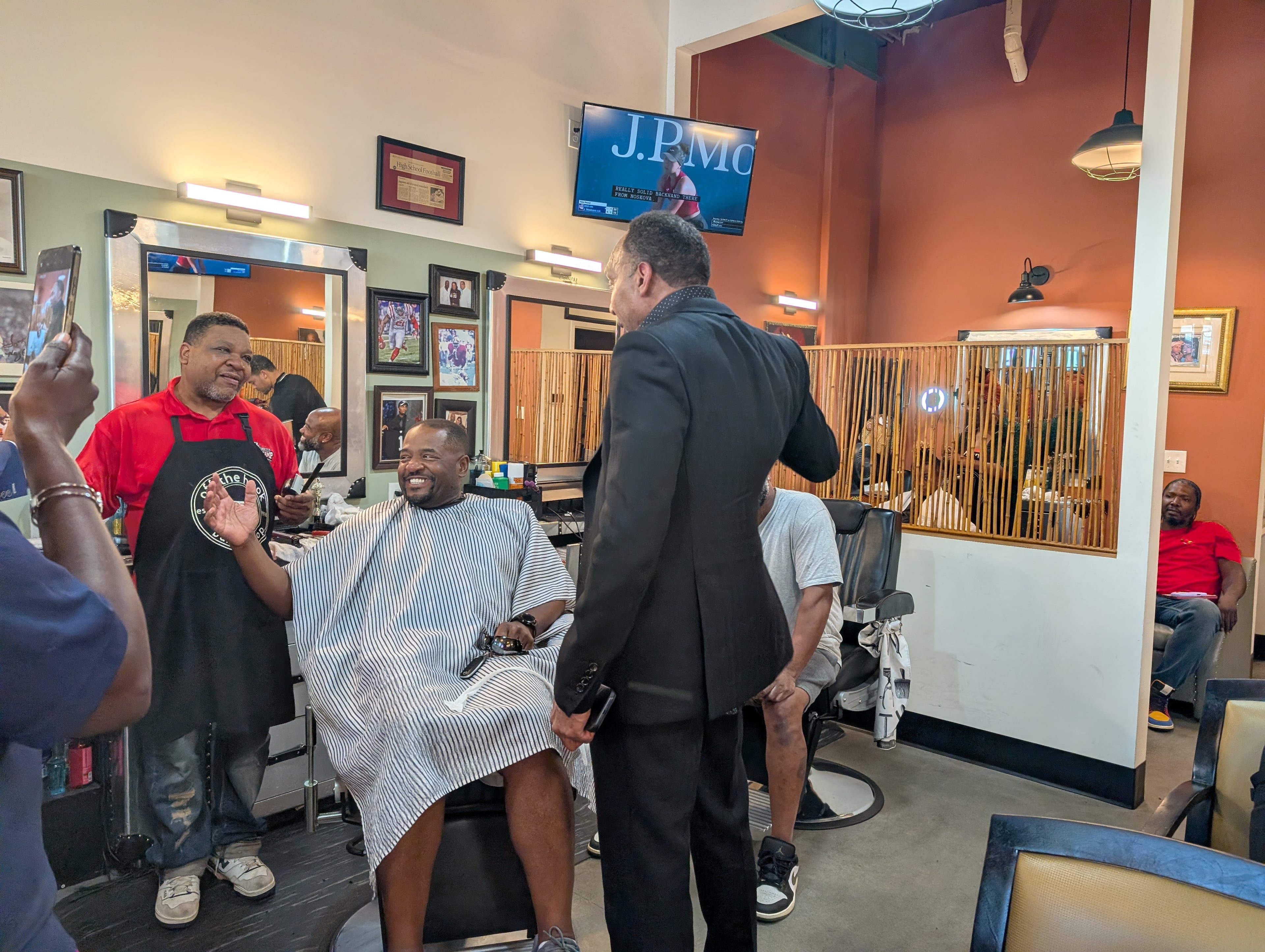
He took aim at Dallas Cowboys fans, weighed in on LeBron James and fielded questions about the Atlanta Falcons and Atlanta Hawks from customers eager to hear his unfiltered takes.
Smith panned the Falcons’ choice of Tua Tagovailoa as the starting quarterback, calling him “punch drunk.”
On the Hawks’ 140-89 playoff loss to the New York Knicks, he said the “entire Hawks coaching staff is lucky to have their jobs.”
The conversation turned more serious when I asked Smith about a debate that had little to do with sports: his recent “Thumbs Down Award” from the National Association of Black Journalists.
At its annual convention in Atlanta in August, NABJ cited what it called Smith’s “recurring public pattern of disparaging commentary directed at prominent Black women across politics, sports and media.”
Smith objected to the award, arguing that NABJ had not provided specific examples to support its criticism.
“My disagreeing with a woman doesn’t mean I’m disparaging her,” Smith said from the barber’s chair. “Where did I disparage somebody?”
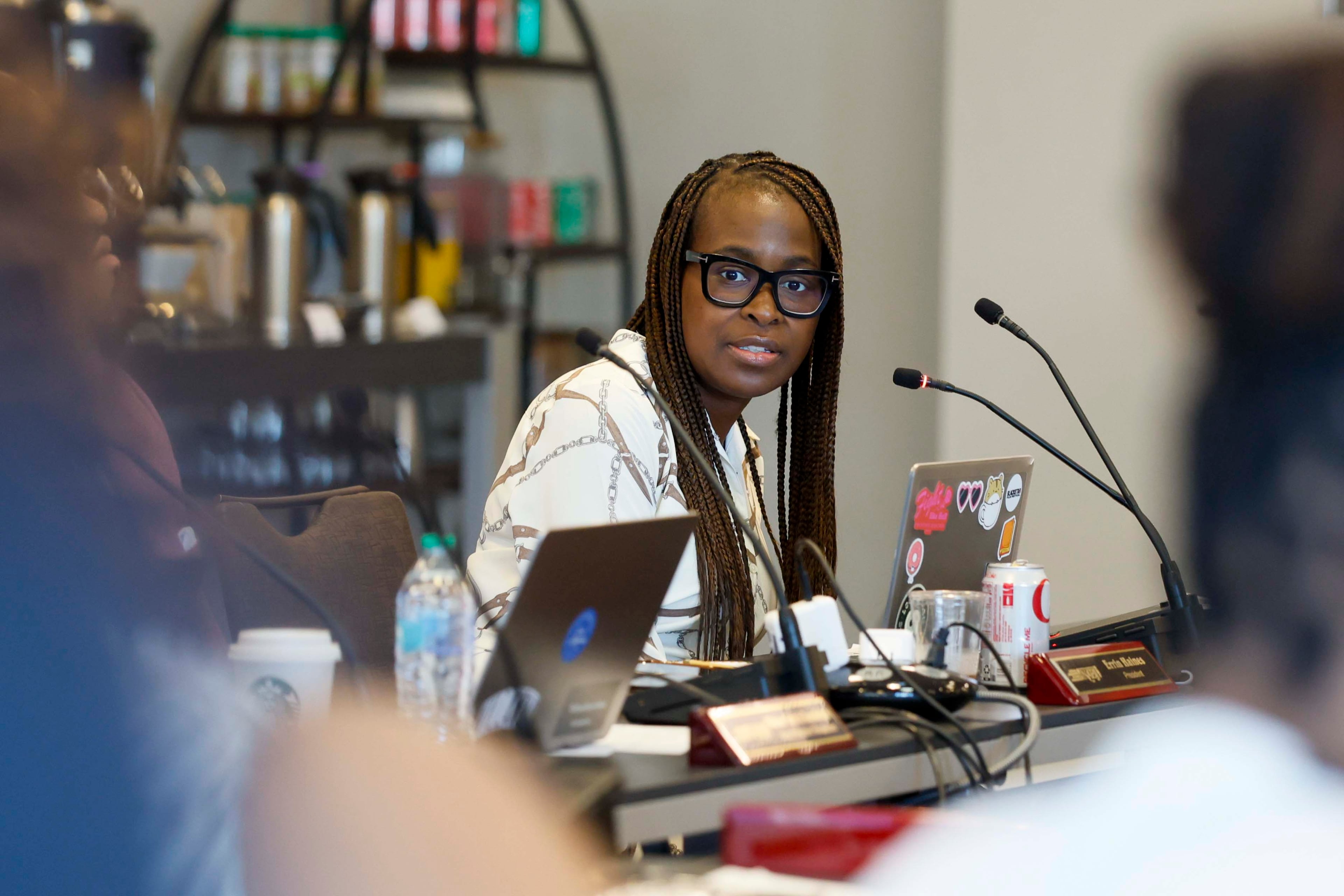
NABJ President Errin Haines said what led to Smith receiving the “Thumbs Down Award” was a repeated record of him disparaging prominent Black women, including former MSNBC host Joy-Ann Reid, former Vice President Kamala Harris and U.S. Rep. Jasmine Crockett.
In September 2025, Smith criticized Crockett’s attacks on President Donald Trump as “verbiage and rhetoric for the streets.” He later apologized to Crockett, acknowledging that his remarks had contributed to criticism directed at a Black woman.
Smith also drew backlash after saying that Reid’s departure from MSNBC was attributed to declining ratings. And he has also been outspoken about his decision to vote for Harris in the 2024 presidential election, later saying that he regretted his vote.
In an email, Haines said the comments amounted to something larger than individual disagreements.
“Taken together, his remarks have helped to contribute to the normalization of disrespect of Black women in public that is beyond the bounds of respectful criticism and particularly harmful in a climate where race and gender are being weaponized in our politics and broader society,” Haines said.
In previous years, Smith has had a significant presence at recent NABJ conventions, hosting live versions of ESPN’s “First Take” in Chicago in 2024 and Cleveland in 2025.
“I have brought a nationally televised show to them for two years,” Smith said. “You had no problem with me the year before. You had no problem with me the year before that.”
He then challenged NABJ to weigh the criticism that led to the award against his broader record of mentoring Black journalists, supporting Black women in the industry and advocating for HBCUs.
“Let’s put one record against another and see what we do.”
Smith and Haines have not spoken directly about the award, although Smith said he invited her to discuss it publicly on his show.
Haines has said she would prefer a private conversation, adding that she has been in contact with Smith’s team and is hopeful that the two will meet to have a productive conversation about the award and what moving forward will look like.
“You talk about me publicly; why do you all of a sudden want to meet me privately?” Smith said.
Haines said the controversy surrounding the award has already generated some of the conversation NABJ hoped it would.
“Since receiving the ‘Thumbs Down Award,’ Stephen A. has already publicly engaged in substantive dialogue with Black women on their platforms,” Haines said. “I also appreciate the much-needed, broader conversation the news of this award has created around an important issue NABJ has been focused on in the last year: the unacceptable and ongoing disrespect and disparagement of Black women in public.”
For the customers at Off The Hook, the afternoon offered something different from watching Smith debate on television: a chance to challenge him themselves.
“[His visit] gave us a perspective of who he really is versus what you see on TV,” said Karl Booker, owner of Off The Hook Barber Shop. “It was a good thing for people who come to the shop to get an opportunity to speak with him up close and personal.”
Smith said he isn’t interested in avoiding disagreement. His career, after all, has been built on it.
“One of the things that people don’t realize is that I believe the secret to our success [at ‘First Take’] is that I leave the door open to be corrected,” Smith said. “Each person is on another side, and then you come to a conclusion. And after that, you move forward.”
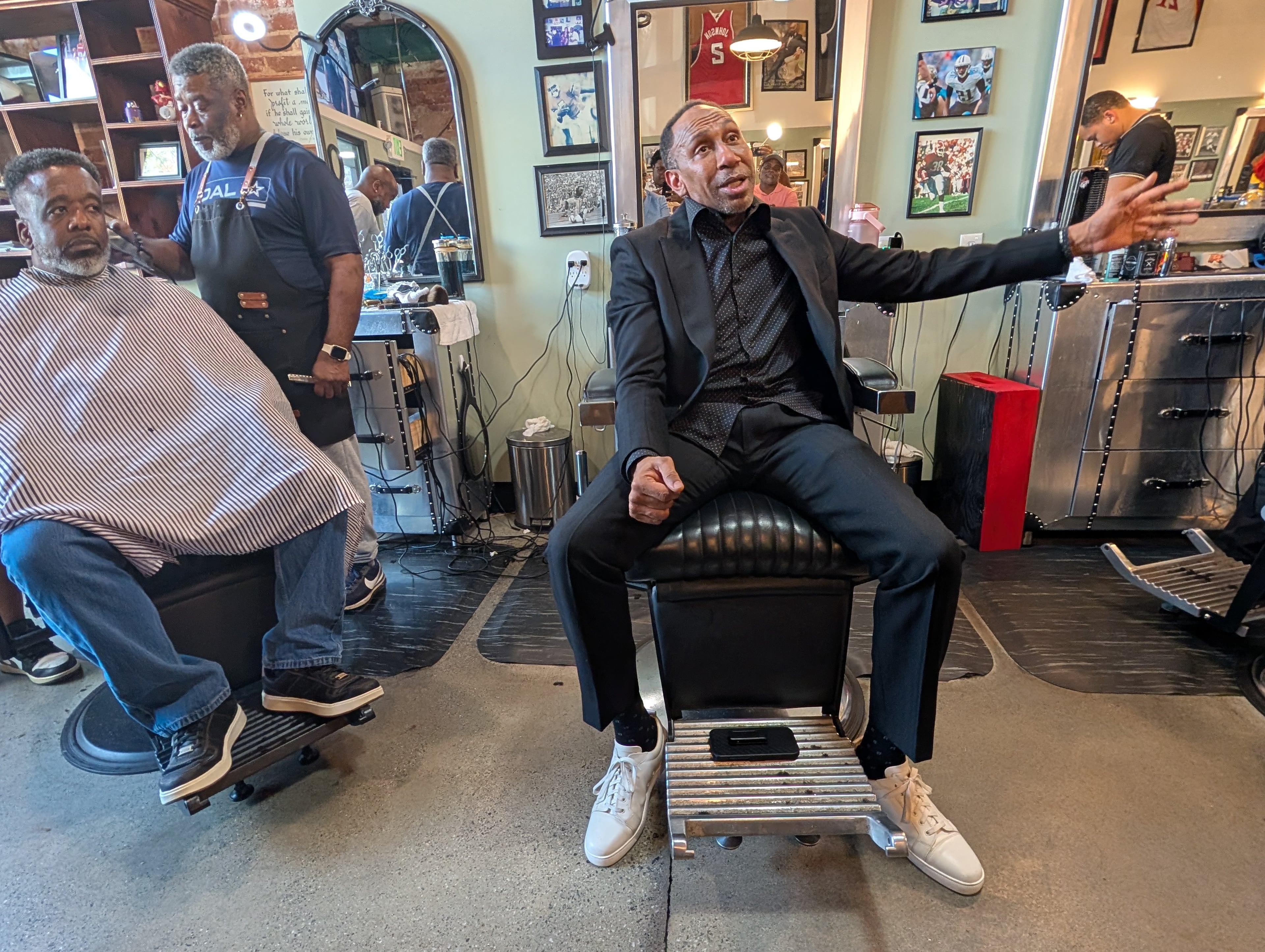
And sitting in a barber’s chair, surrounded by customers who had spent the afternoon challenging him on everything from the Falcons to politics, Smith pointed to the room around him.
“I can walk into any barbershop, any Black community in America, and put my record up against these people talking about me,” he said. “It ain’t a problem.”
A.R. Shaw is an Atlanta-based journalist and author of “Trap History: Atlanta Culture and the Global Impact of Trap Music”; his work has appeared in The Guardian, ABC News, NPR, and BBC.